01First a distinction: there are three kinds of copying
Giving a building the shape of a leaf and doing the job that a leaf does are not the same thing. The confusion starts here; so let us divide it into three from the outset.
| Kind | What is copied | Example | Risk |
|---|---|---|---|
| Form | Appearance | A railing that curls like a flower, a car shaped like a fish | It may be beautiful, but there is no guarantee that it works |
| Function | How a job is done | The hook-and-loop fastener, from the way a spiny seed clings | If the principle is misunderstood, the product does not work |
| System | Parts that feed one another | One factory’s waste becoming another’s raw material | This is the hardest; it cannot be done with one product, it needs an order |
The word biomimicry is used for the second and third rows. The first row has another name: imitation of form. Almost all the successes in this article come from the second row, and most of the fiascos from the first. Keep this at the back of your mind.
02The flapping human: a thousand years of copying the wrong thing
A bird flaps its wings and flies. So if a human puts on wings and flaps, he too will fly. This reasoning seems so natural that humanity struggled for close to a thousand years to give it up. In mythology there are the wax wings of Icarus. It is told that Abbas ibn Firnas in Andalusia in the 9th century, and Hezarfen Ahmed Çelebi in Istanbul in the 17th, put on wings and glided; the only source for the second is Evliya Çelebi, and it should be read as a legend. Around 1505 Leonardo da Vinci filled a notebook on the flight of birds and drew machines with flapping wings; none of them flew.
Why did they not fly? The answer lies not in biology but in physics, and its name is the square-cube law. If you enlarge a living thing to twice its size in every direction, its wing area becomes four times as great and its weight eight times. A design that works for a sparrow is crushed under its own weight when brought to human size. The breast muscle of a bird makes up a considerable part of its body; that of a human is not strong enough for such a job. Everyone who copied flapping was copying the form without taking scale into account.
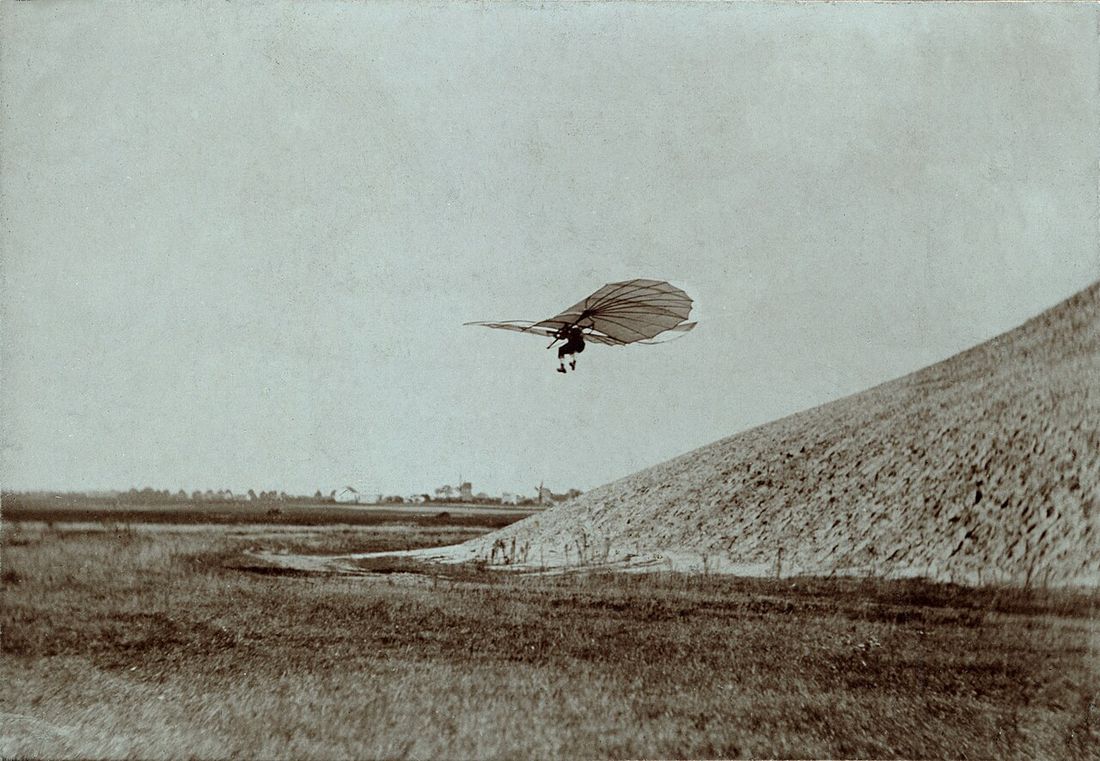
The person who untied the knot looked at the bird with different eyes. The German engineer Otto Lilienthal measured storks for years and in 1889 published his book on the flight of birds. The conclusion he reached was plain: what matters is not flapping but the curved section of the wing; that is what produces lift. After 1891 he made more than two thousand flights in gliders he built himself. On his flight of 9 August 1896 his glider fell from a height of about 15 m; sadly, Lilienthal lost his life the next day. His total flying time was about five hours, and those five hours laid the foundation of aviation.
The Wright brothers began with his data. They too looked at birds, but they saw another detail: a bird twists the tip of its wing when it turns. The wings of the machine that flew in 1903 were twisted by wires. The engine and the propeller, on the other hand, exist in no bird. The aeroplane is the marriage of two principles taken from nature with a means of propulsion not found in nature.
The mood of the period is also part of the story. The end of the 19th century is the age of the steam engine, of patent races and of newspapers. The men who tried to fly were both heroes and figures of fun; thanks to photography every attempt, including the unsuccessful ones, turned into news that crossed continents. The photographs of Lilienthal on his glider were what the Wright brothers read and were fired by.

03A water-lily leaf and a glass palace
Victorian Britain was fond of plants. The ships of the empire carried seeds from every part of the world, and the rich competed over which exotic plant they would bring into flower in their glasshouses. In 1849 the gardener Joseph Paxton brought the giant water lily from South America into flower for the first time in Britain. The leaf approached 2 m, and when Paxton looked underneath it he saw an engineering lesson: thick ribs radiating from the centre and fine cross-veins connecting them. He sat his small daughter on the leaf; the leaf carried her.
Two years later a building was needed for the great world exhibition in London, and no architect’s proposal looked as though it would be finished in time. Paxton built the same arrangement in cast iron and glass: main beams, slender supports between them, and glass on top. The parts were made in factories and joined on site in a few months. The Crystal Palace was the first large building to be assembled from mass-produced parts. What was copied here is not form; it is the principle of distributing load through ribs. The same principle works in every steel roof today.
About fifteen years later an anatomy professor and a bridge engineer met in Zurich. Hermann von Meyer was studying the spongy tissue in the head of the thigh bone; Karl Culmann looked at the drawings and saw that the lines inside it followed the same path as the lines of force in a crane he had designed. The bone was putting material only where the load passed. This observation is the ancestor of the software that lightens aircraft and car parts today: the computer deletes the material that carries no load, as bone does. It is also often said that the famous iron tower in Paris was inspired by the thigh bone; it is a pleasant story, but we have no document that proves it.
04A dog, a walk, a ripping sound
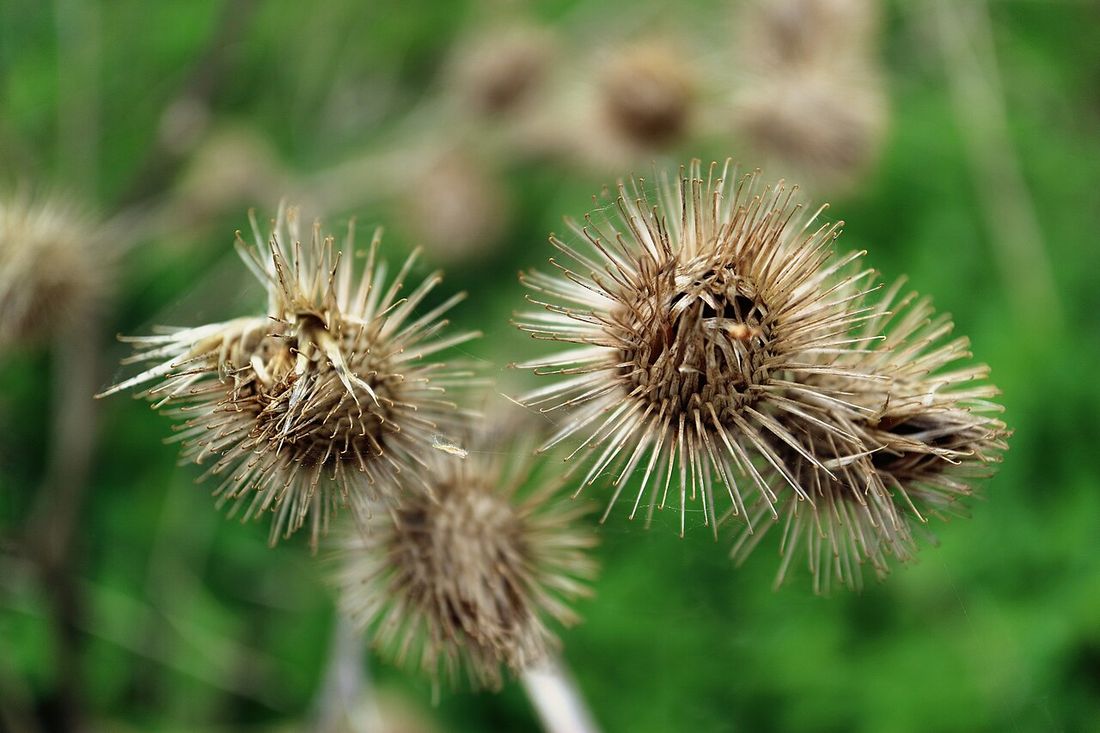
In 1941 the Swiss engineer George de Mestral returned from a mountain walk with his dog, and both of them were covered with burdock seeds. Most of us pick them off, grumbling; he put one under the microscope. At the tip of every spine there was a tiny hook, and the hooks caught in the loops of the fabric. The plant’s aim was to stick its seed to the fur of a passing animal and have it carried far away.
Turning the idea into a product took more than ten years, because cotton hooks were crushed after a few uses. The solution came from nylon, which was just becoming widespread in those years: a nylon hook shaped by heat kept its form. The patent was granted in 1955. Nylon is itself a story of imitation; it is the work of chemists who, in the 1930s, were looking for a fibre to take the place of silk. So the hook-and-loop fastener is an artificial spine made of artificial silk.
In the first years the world of fashion found it ugly. Those who saved the product were astronauts, skiers and children who could not tie their shoelaces. Without the abundance of synthetic materials after the war and the ready-to-wear industry, de Mestral’s observation would have remained a note in a notebook. A good idea waits for the industry that can produce it; we shall see this several more times in this article.

05Where did the word come from? From the Cold War to environmentalism
The thing existed before it had a name. In the 1930s the American Otto Schmitt was studying how the nerves of the squid transmit a signal, and he built an electronic circuit that imitated this behaviour. That circuit is inside almost every electronic device today. Schmitt later gave the name “biomimetics” to what he was doing.
In 1960, at an American air base, Jack Steele put forward the word “bionics”. The place is no coincidence. In the years of the Cold War a large part of the money for research came from the military, and the military wanted to know how dolphins swam so fast and how bats found their way in the dark. The fate of the word, however, was changed by a television series: after the series broadcast in 1974, whose hero had machine parts fitted to his body, “bionic” began to make everyone think of someone half human and half machine.
The third word, biomimicry, spread in 1997 with Janine Benyus’s book, and it addressed an entirely different world. In between there had been oil crises, the environmental movement and concern about the climate. The question had changed. The earlier generation asked, “What can we take from nature?”; the new question was this: “How does nature do this without producing waste, at room temperature and with water?” The three names for the same work carry the spirit of three different periods: curiosity, power and conscience.
06Physics: surfaces, flow and a birdwatcher
The leaf that washes itself. The lotus lives in muddy water and its leaf is always clean. In the 1970s the German botanist Wilhelm Barthlott looked at the leaf with an electron microscope and saw the opposite of what was expected: the surface was not smooth, it was covered with microscopic bumps and wax crystals. A drop of water rests on the tops of the bumps, on the air trapped between them; it cannot spread over the surface, it rolls like a marble and collects the dust as it rolls. The cleanness comes from the roughness. Exterior paints made on this principle mean walls that wash themselves in the rain.
The skin of the shark. The skin of a shark is not smooth; it is covered with fine grooves running in the direction of flow. These grooves restrain the small eddies close to the surface and reduce friction. In the 1980s aviation researchers pressed the same grooves into plastic film. Today the fuselages of some passenger and cargo aircraft are covered with this film; the gain is around one per cent. It sounds little, but one per cent of the fuel an aircraft burns over its lifetime amounts to tonnes of fuel.
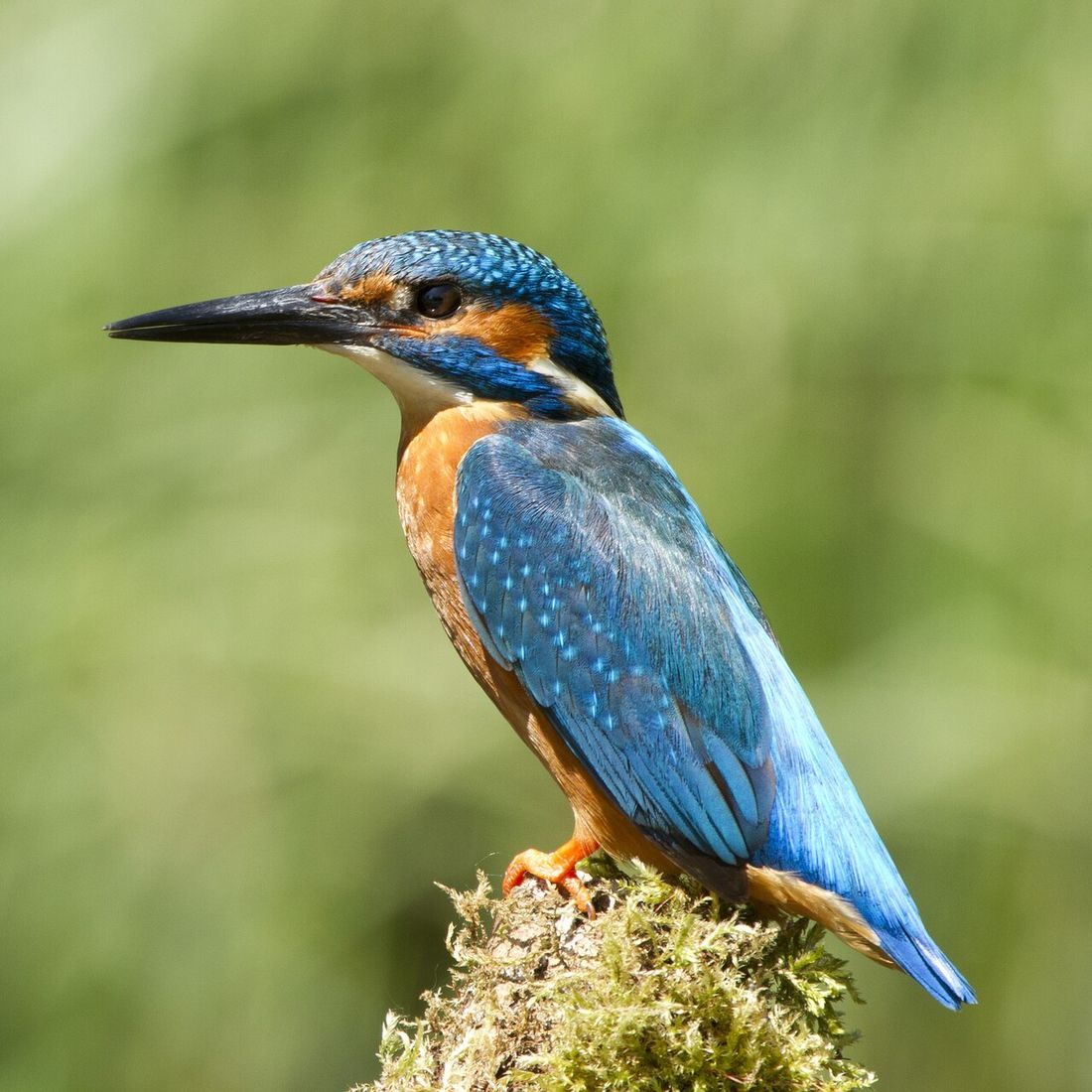
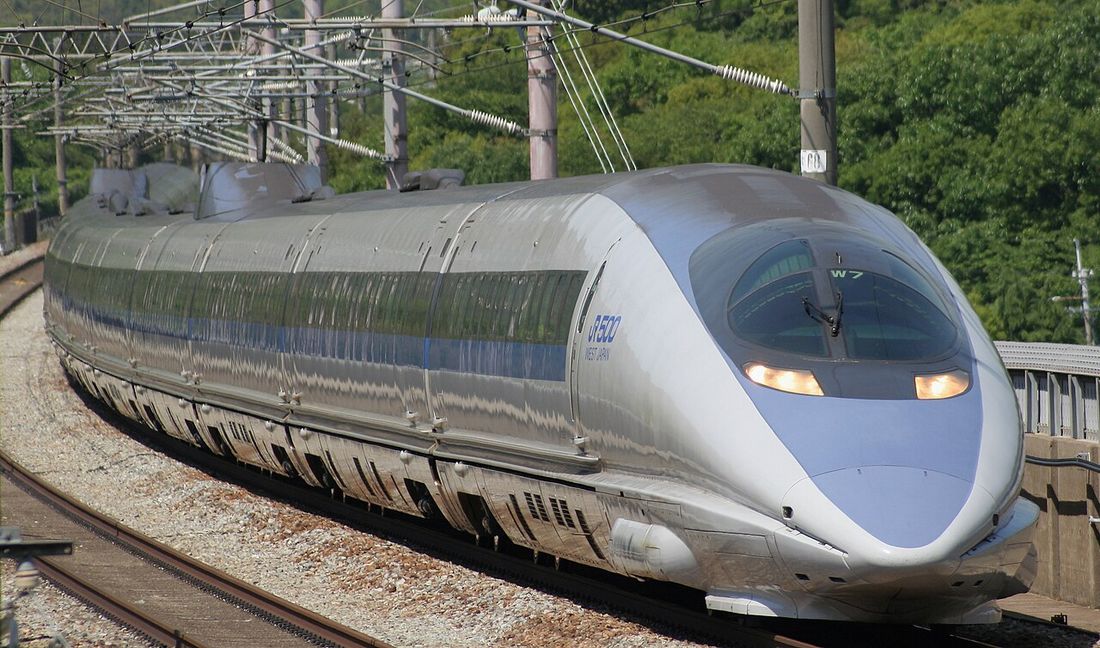
The kingfisher and the high-speed train. This is my favourite story in this article. At the beginning of the 1990s Japan’s high-speed trains compressed the air in front of them as they entered a tunnel, and the air came out of the other end of the tunnel with a noise like a cannon shot. The houses nearby complained. Eiji Nakatsu, an engineer at the railway company, was also a birdwatcher, and the kingfisher came to his mind: this bird dives from air into water, that is, from a thin medium into a dense one, with almost no splash. Nakatsu’s team tested different nose shapes by dropping them into water; the one that entered most gently was the one resembling the beak of the kingfisher. The train that entered service in 1997 was about 10% faster, used about 15% less electricity and stayed below the noise limit. The same engineer also reduced the noise of the arm through which the train takes its electricity by about 30%, inspired by the serrated feathers that let the owl fly silently.


The gecko and the whale. The gecko walks upside down on glass, and there is no glue on its foot. On its sole there are millions of hairs; the tip of each hair comes so close to the surface that the weak forces of attraction between molecules add up and carry the animal. The leading edge of the humpback whale’s flipper, for its part, is bumpy, and these bumps allow the flipper to keep its grip even at steep angles; the same idea was tried on wind-turbine blades. Both work very well in the laboratory, and neither has really reached the shop shelf. Gecko tape does not hold once it gets dusty. The animal cleans its foot; the tape cannot. Nature’s solution often comes together with a living thing that does the maintenance; we copy only half of it.
07Chemistry: work done at room temperature
In chemistry the difference between nature and ourselves is the most embarrassing of all. The bacteria on the root of a legume turn the nitrogen in the air into fertiliser at room temperature and normal pressure. We do the same job at a temperature of hundreds of degrees and a pressure of hundreds of atmospheres; a considerable slice of the world’s energy goes on it. A leaf produces fuel from sunlight; the artificial version of this has still not left the laboratory. The mussel sticks to wet rock under water; most of our adhesives require the surface to be dry.
There are real successes in this field too. Tissue adhesives used in surgery have been produced from the adhesion molecule of the mussel. The method of improving enzymes by making them evolve in the laboratory received the Nobel Prize in Chemistry in 2018; today it is used in the production of detergents and medicines. Note this: what is copied here is not even a molecule; it is evolution itself, that is, the method of trial, elimination and trying again.
Fiasco is not lacking either. Spider silk is stronger than steel for its weight, and a spider farm cannot be set up, because spiders eat one another. In the 1990s a Canadian company found a brilliant idea: to transfer the silk gene to the goat and collect the silk protein from the milk. The spider goats really were born and made the newspaper headlines. But turning the protein in the milk into thread as the spider does could not be achieved; silk was never produced in commercial quantities. The company changed hands and then went bankrupt; two of the goats were sold to an agricultural museum in 2009. The spider does not only produce the protein, it also spins it. Half of the recipe is material, the other half workmanship.
Another example concerns colour. The blue of some butterflies is not a pigment; microscopic layers in the scales of the wing reflect back only the blue part of the light. That is why it does not fade. On the same principle a coloured fabric without dye and a screen readable in sunlight were produced. The fabric remained in a small market; the screen could not hold on while ordinary screens were rapidly becoming cheaper and better. The physics was right, the timing wrong.
08Biology: copying information
The greatest success of biomimicry in the 20th century is not an object. In 1943 a neuroscientist and a logician wrote a simple mathematical model of the nerve cell: a unit that adds up its inputs and fires when the threshold is exceeded. In 1958 the first machine that learns was built from these units. The idea was belittled for decades, fell from favour twice and returned when sufficiently fast computers and sufficient data arrived. This is the foundation of what we call artificial intelligence today. Just as the hook-and-loop fastener waited for nylon, the neural network waited for the processor.
The other examples are more modest, but they work every day. The method by which ants find the shortest path by leaving a trail has entered the software that calculates the routes of delivery vehicles. Japanese researchers placed oat flakes in front of a slime mould in the positions of the cities around Tokyo; the network the mould built resembled, to a surprising degree, the railway network that engineers had built over decades. And the habit of bone of putting material only where it is needed lightens parts in aircraft cabins today.
Did we learn radar from the bat? No. This is one of the most frequently repeated errors. Systems for locating by sound and by radio waves were built first; that bats find their way by sounds the human ear does not hear was proved only at the end of the 1930s, when instruments able to record those sounds were made. Here nature did not inspire us; it proved us right afterwards. When the same answer to the same question is found by two separate routes, it is a good sign that the answer is correct.
09Where we went wrong: a museum of failures
Success stories are told at conferences; the truly instructive ones are the others.
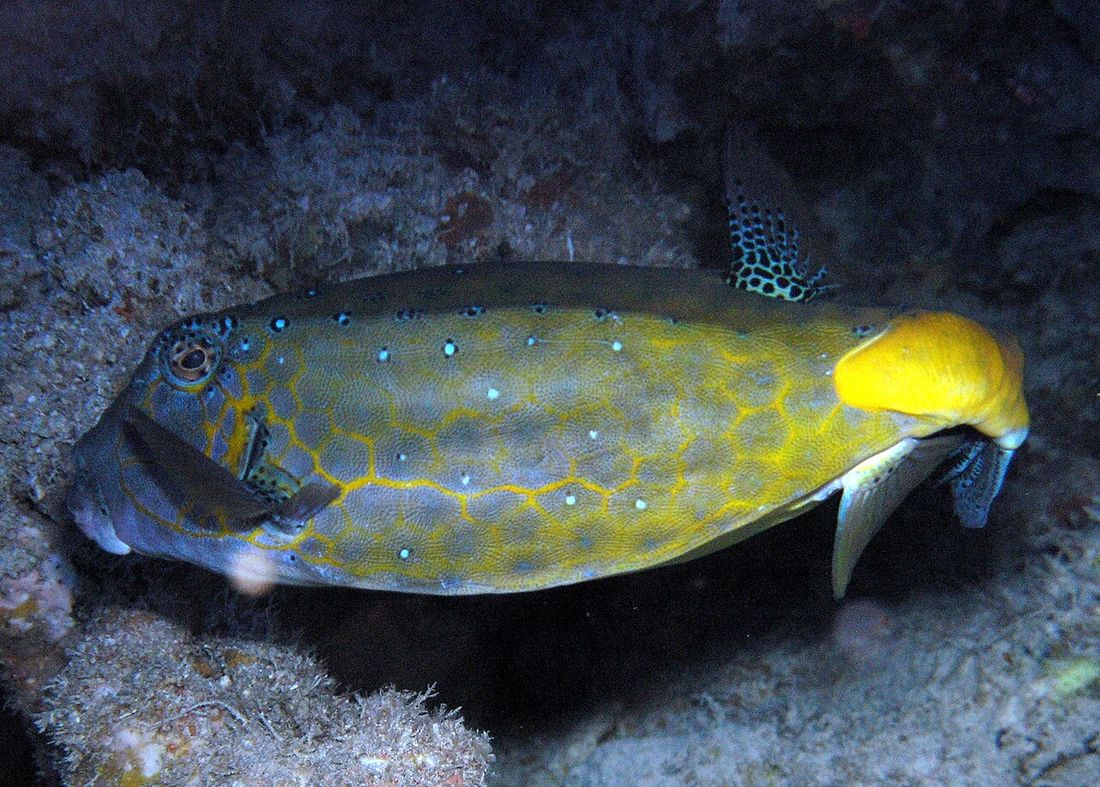
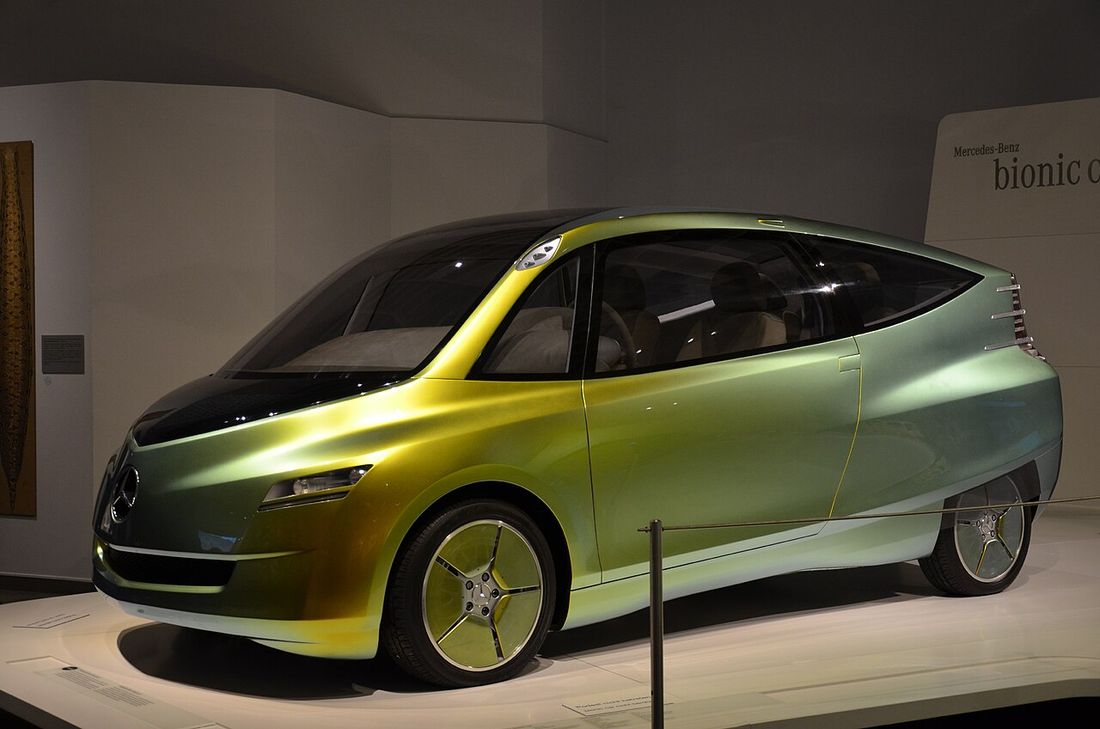
A car from a fish (2005). A German car manufacturer presented a car modelled on the tropical boxfish. Although the fish looks angular, it was thought to move easily through water and to swim stably. The drag coefficient of the car was announced as 0.19; this is a very good value. Ten years later biologists measured the fish itself: the drag of its body did not turn out low compared with other fish, and the flow over its shell did not keep the fish stable; on the contrary, it upset its balance. The fish uses this instability to turn nimbly. So the car was good, but not thanks to the fish; the engineers had done their own job well in the wind tunnel. Nobody, however, had held a ruler to the model in nature.


The shark swimsuit (2000–2010). In 2000 swimsuits inspired by shark skin were sold to swimmers, and records were broken. In 2012 a fish scientist tested the fabric and real skin in the same apparatus. The result was clear: the surface of the fabric did not resemble shark skin at all, and it did not reduce friction. The swimsuits had worked, but most probably because they compressed the body and improved posture. The story was on the label; the effect was somewhere else.
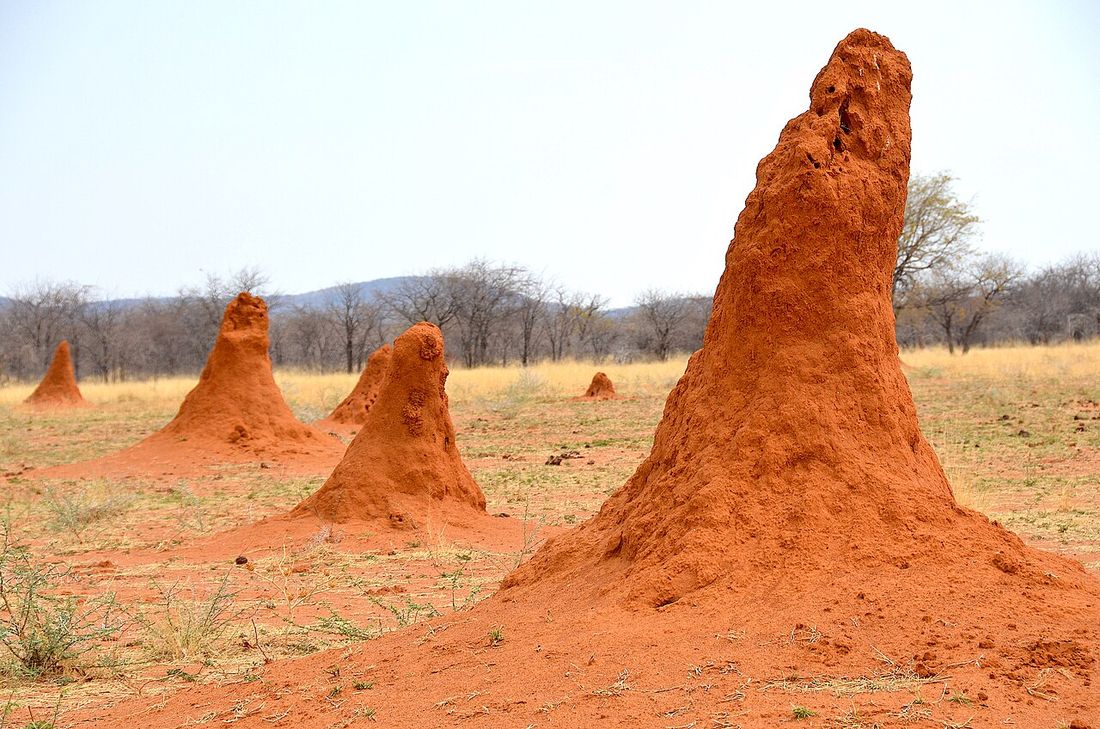
The termite building (1996). This is the finest example, and it fits no category. An office and shopping centre in the capital of Zimbabwe was designed on the idea that termite mounds cool themselves: thick walls absorb heat during the day, and at night cool air is drawn through chimneys. The building works without air conditioning and makes do with a small part of the energy used by comparable buildings. A great success. The trouble is that later measurements showed that the termite mound does not work like this. The mound does not regulate temperature; with the difference in temperature between night and day it breathes in and out like a lung and exchanges gases. The architect misunderstood nature and built the right building. The lesson to be drawn is a pleasant one: the link between the source of inspiration and the product may be looser than we think.

| Attempt | What was copied | Why it did not work |
|---|---|---|
| Flapping machines | The movement of the bird | Scale: at human size, weight exceeds muscle power |
| Car from a fish | The form of the fish | The model had not been measured; the fish does not swim as was thought |
| Shark swimsuit | The name of the skin | The fabric did not resemble the skin; the effect had another cause |
| Spider goat | The protein of the silk | The spinning process could not be copied |
| Butterfly screen | Structural colour | Physics right, market and timing wrong |
| Gecko tape | The grip of the hairs | Dust: the animal cleans its foot, the tape cannot |
10What did it bring, and what did it take away?
What it brought. The aeroplane, the steel roof, the hook-and-loop fastener, the self-cleaning surface, the quieter train, the lighter aircraft part, the machine that learns. What these have in common is that the principle, not the form, was taken. One gain also concerns the way of looking: the move from designing “in spite of nature” to designing “by looking at nature” put the questions of waste and energy in the middle of the table.
What it took away. The first loss concerns honesty. The sentence “inspired by nature” sells well, and often nobody measures; the swimsuit and the car are examples of this. The second loss is an illusion: the belief that nature always finds the best solution. Evolution does not look for the best; it finds what is good enough and makes do with the material at hand. In our eye there is a blind spot, and in our back the price of walking on two feet. To think of nature as a flawless designer is as misleading as never studying it at all. The third is the matter of origins: for many years a large part of the money in this field came from armies; dolphin research went into the torpedo, insect research into the unmanned aircraft.
Five rules that fit in a designer’s pocket.
- Do not ask about the form, ask about the job. Instead of “What does it look like?”, ask “What does it achieve, and how?”
- Look at scale. What works at the size of an insect may not work at the size of a human. The square-cube law does not bargain.
- Measure the model. If a living thing is said to do a job well, first check whether this has been measured.
- Take the whole recipe. In nature material, process and maintenance come together. Whoever takes only the material is left alone with the spider goat.
- Wait for the industry, or build it. The hook-and-loop fastener waited for nylon, the neural network for the processor, a table lamp for a low-heat light source.
These rules have their counterpart in interior architecture too. The way to keep a space cool is often not to add a machine but to arrange the mass, the shade and the path of the air correctly; the termite building proved this. Giving the shade of a lamp the spiral of a seashell looks like decoration, but that curve is there because it distributes light evenly over the surface; this is the subject of our article on designer lamps. Resembling nature is easy. What is hard is to read correctly the question that nature has solved.