01First, a question: how bright is “bright”?
When you walk into a room and say “it is bright enough in here”, what are you relying on? Your eyes. Yet the eye is the least reliable measuring instrument for this purpose, because it was made not to measure but to adapt to every level of light.
We measure the amount of light in lx (lux); lx shows the density of the light that falls on a surface. The lm (lumen) printed on the box of a lamp is the total light that leaves the source. The relationship between them is simple: if 1 lm falls on a surface of 1 m², there is 1 lx there. W (watt) describes not the light but the electricity consumed; one 10 W LED can give twice as much light as another 10 W LED.
The most striking thing in the figure is this: a well-lit office desk receives about one twentieth of the light outdoors on an overcast winter day. We still read at the desk comfortably, because the eye adapts. For the same reason it is difficult to tell the difference between 150 lx and 300 lx by eye, but after an hour of reading your eyes will tell you the difference.
02Form comes before quantity
The most widespread misconception in lighting is to reduce the task to the question “how many lx?”. You can give a room 300 lx from a single powerful fitting in the ceiling; you can also build the same 300 lx from three separate layers. The measuring instrument shows the same number in both cases. But in one the room becomes a waiting room, and in the other a home.
The American lighting designer Richard Kelly divided light into three layers in 1952. We still work with the same three layers today:
- Ambient light. Light with soft shadows that fills the whole space. It lets you find your way. The best kind is the one whose source cannot be seen: light that strikes the ceiling or a wall and is reflected back.
- Task light. Light given for a task, at the place where the task is done: a reading lamp, a light under the wall cabinets, a desk lamp.
- Accent light. A narrow light that brings forward a painting, a texture or an object. This is what gives a space depth.
Being able to switch and dim the three layers separately is half of the work. If a room has one switch and one fitting, that room can play only one scene: always the same brightness, always the same mood. Yet in the same living room a newspaper is read in the morning, guests are received in the evening and a film is watched at night. One light cannot serve all three.
03Four numbers you should know
When you choose a fitting or a lamp, four values on the box tell you more than its price does.
lx: how much?
We explained this above. You will find how many lx each kind of space needs in the table below.
K: the colour of the light
White light has a colour too; it is called colour temperature and is expressed in K (kelvin). The lower the number, the closer the light is to yellow; the higher the number, the closer it is to blue. The confusing point is this: the light we call “warm” has a low K value.
Ra: how accurately does it show colours?
Have you ever liked a fabric in a shop and failed to recognise its colour when you brought it home? The fabric is the same fabric; it is the light that has changed. Ra (or CRI) expresses, on a scale of up to 100, how accurately a light source shows colours compared with daylight. For workplaces the lower limit is generally 80. We recommend 90 and above wherever human skin, food, fabric or works of art are seen. Under light with a low Ra, skin looks pale, food looks unappetising and wood looks the colour of mud.
UGR: does it dazzle?
UGR is a score that shows how much glare a lighting arrangement produces. A low value is good. In offices and classrooms it is required not to exceed 19. What this means in practice is simple: if you can see the bare, bright surface of the light source from where you sit, there is glare.
Try it at home
The flicker test. Set your phone’s camera to slow motion and point it at the light. If dark bands move across the screen, that light is flickering. Your eyes do not see this directly, but your brain registers it; over time it comes back as headache and eye strain. It is the most common fault of cheap LEDs.
The hand test. Hold your hand first in front of the window and then under the lamp. If your skin turns grey or takes on a greenish tint under the lamp, that lamp has a low Ra value.
04Values for each kind of space
For workplaces, the standard taken as the basis in Europe and in Türkiye is EN 12464-1. The values it gives are lower limits, and they describe the average that must still be achieved when the installation has become dirty and worn over the years; a new installation therefore starts above them. There is no binding standard for homes; the values given for them come from design practice.
| Space | General | Where the task is done | Colour |
|---|---|---|---|
| Home · design practice | |||
| Living roomShould be dimmable. Ra 90+ | 100–200 lx | Reading 300–500 lx | 2700–3000 K |
| KitchenWorktop light from under the wall cabinets | 200–300 lx | Worktop 500 lx | 3000–4000 K |
| BathroomMirror light at face level, from both sides | 200 lx | Mirror 300–500 lx | 3000 K |
| BedroomA separate, very dim light for the night | 50–150 lx | Reading 300 lx | 2700 K |
| Work and education · EN 12464-1 | |||
| OfficeUGR 19 at most, Ra 80 at least | 300 lx surroundings | Table 500 lx | 4000 K |
| Meeting roomDimmable; a separate scene for presentations | — | Table 500 lx | 3000–4000 K |
| ClassroomSeparate light for the board | — | Desk 500 lx | 4000 K |
| Corridor, stairs | 100–150 lx | — | to match the space |
| Hospitality and retail | |||
| RestaurantThe standard leaves the atmosphere to the design. Ra 90+ | 50–200 lx | Accent on the table; kitchen 500 lx | 2200–2700 K |
| HotelA separate bedside reading light in the room | Lobby 200–300 lx | Reception 300 lx | 2700–3000 K |
| ShopAccent several times the general level. Ra 90+ | 300 lx | Cash desk 500 lx | 3000–4000 K |
| Healthcare | |||
| Patient roomNight observation light 5 lx | 100 lx | Examination 300–1000 lx | 3000–4000 K |
| Operating theatreRa 90+ | 1000 lx | Operating field 10,000–100,000 lx | 4000–5000 K |
| Production and storage | |||
| FactoryThe finer the work, the more light | Rough work 200 lx | Medium 300 · fine 500 · precision 750 lx | 4000–5000 K |
| WarehouseVertical surfaces between the racks must be lit too | 100–200 lx | Packing 300 lx | 4000 K |
| Museum and exhibition · upper limit, to protect the work | |||
| Paper, textiles, watercolour | — | 50 lx at most | Ra 95+ |
| Oil painting, wood | — | 200 lx at most | Ra 95+ |
The values are a guide. The age of the user, the daylight and the nature of the task change the result; a 60-year-old eye needs noticeably more light than a 20-year-old eye to see the same task.
Note the last rows of the table: in a museum the numbers are not lower limits but upper limits. Light shows the work, but it also wears it; the damage accumulates and cannot be undone. I wrote my master’s thesis on the composition of lighting in museum and exhibition spaces. The most lasting lesson I took from it is this: light does not only show; it builds “sub-spaces” inside a space without raising a wall. A manuscript lit with 50 lx shines as if it were lit with 500 lx when its surroundings are left dark. What decides the effect is less the amount of light than the difference between it and its surroundings. This lesson holds in exactly the same way at home and in a restaurant.
05The seven most common mistakes and their corrections
1. A field of spotlights
This has been the most widespread lighting mistake in Türkiye over the last twenty years: filling the suspended ceiling with recessed spotlights at equal distances. What is the result? The light falls on the floor. Yet when we look at a room we look not at the floor but at the walls and at faces. Because the walls stay dark, the room looks narrower than it is; the light from above casts shadows under the eyes; and the ceiling is full of holes. The reason it spread so widely is not aesthetic; it is convenience: the plasterboard suspended ceiling became inexpensive, the recessed spot came to be sold in every hardware shop, and an evenly spaced grid was a solution an electrician could apply alone, with no drawing and no calculation.
The correct way: Give the light to the surfaces first. A light that washes a wall from top to bottom gives a more spacious room than five spotlights that pour the same power onto the floor.
2. One switch, one scene
All the fittings are connected to a single switch; the room is either fully lit or fully dark. The correct way: At least three separate circuits (ambient, task, accent) and, where possible, dimming. Being able to dim the light should not be regarded as a luxury; the same room serves very different purposes in the course of a day.
3. Mixing colour temperatures
A cool white spotlight in the ceiling, a yellow lampshade in the corner, a bluish strip under the wall cabinets. Each was bought at a different time, and each is a different white. The correct way: Choose one colour temperature for a space and keep to it in every source. Even two production batches of the same product can differ in tone; buy LED strip at one time and from one batch.
4. Cheap LEDs
A cheap LED is bright on the first day. Its problems appear later: it shows colours faded, it flickers, its colour drifts within a few years, and its driver (the electronic circuit inside it) overheats and fails. When three of twenty spotlights recessed in the ceiling turn pink, you have to replace the other seventeen as well, because the same product is no longer made. The correct way: A product with an Ra of 90 or above, a flicker-free driver and a written guarantee. You can save on the body of the fitting; you cannot save on the light source and the driver.
5. Lighting the mirror from above
A single spotlight placed directly above the bathroom mirror casts shadows under the eyebrows, the nose and the chin. Part of the tired face you see in the mirror in the morning is made by that spotlight. The correct way: The light should reach the face from the front and from both sides, at eye level. This is the reason why lights are lined up around the mirrors of hairdressers and dressing rooms.
6. Leaving glare out of account
A bare LED strip visible at eye level, spotlights reflected one by one in a glossy worktop, a window directly opposite the screen. All of these are the same problem: the eye meets a point brighter than the place it is looking at, and it tires. The correct way: Hide the light source and show the light itself. Put LED strip behind a profile and a frosted cover; choose spotlights of the deep-bodied type, in which the light source sits well inside.
7. Leaving the lighting until last
This is perhaps the most expensive mistake. The ceiling is closed, the painting is finished, the furniture arrives, and only then is the question asked: “Where shall we put the lights?” At that stage a light can only be put where space is left, not where it is needed. The correct way: The lighting is drawn on the same day as the furniture layout. The place of the reading light cannot be known before the place of the armchair, nor the place of the pendant before the place of the dining table. The cables are laid before the walls are closed.
06Do not forget what is free: daylight
The best light source is still the window: its colour is correct, it changes by itself during the day, and it has no bill. Artificial lighting should begin where daylight ends and continue what daylight does. Placing a desk that is used during the day so that the window is to its side does more than two extra fittings in the ceiling. Regard the curtain as a lighting element too; a sheer curtain turns harsh sun into a soft light that spreads through the whole room.
07What did the LED bring, what did it take away?
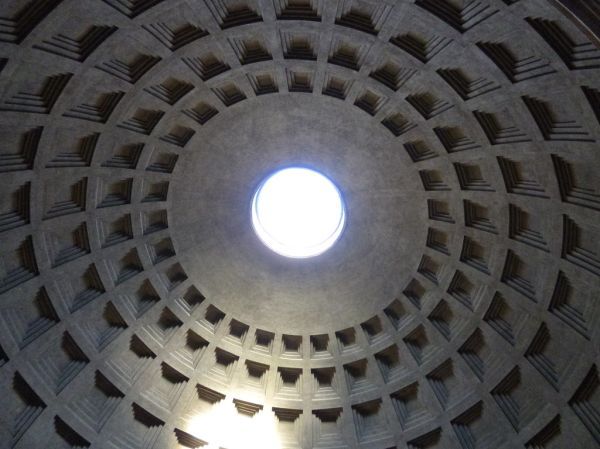
Most of the mistakes in this article could not have been made thirty years ago, because light was expensive. The incandescent bulb turned most of the electricity it used into heat; putting twenty sources in one room heated both the bill and the ceiling. The LED removed this constraint and, with the constraint, took the sense of measure away too.
What follows from this is not a prohibition but a measure: as light became cheaper, deciding where not to put it became as important as deciding where to put it.
08Do not leave light until last
In a well-lit space people do not notice the light. They notice only that the room looks spacious, the food looks delicious and the face of the person opposite looks rested. In a badly lit space they cannot say what is wrong, but they do not want to stay there long.
Light is the cheapest and most effective material we have, provided that it is not left until last.