01Where did this problem come from?
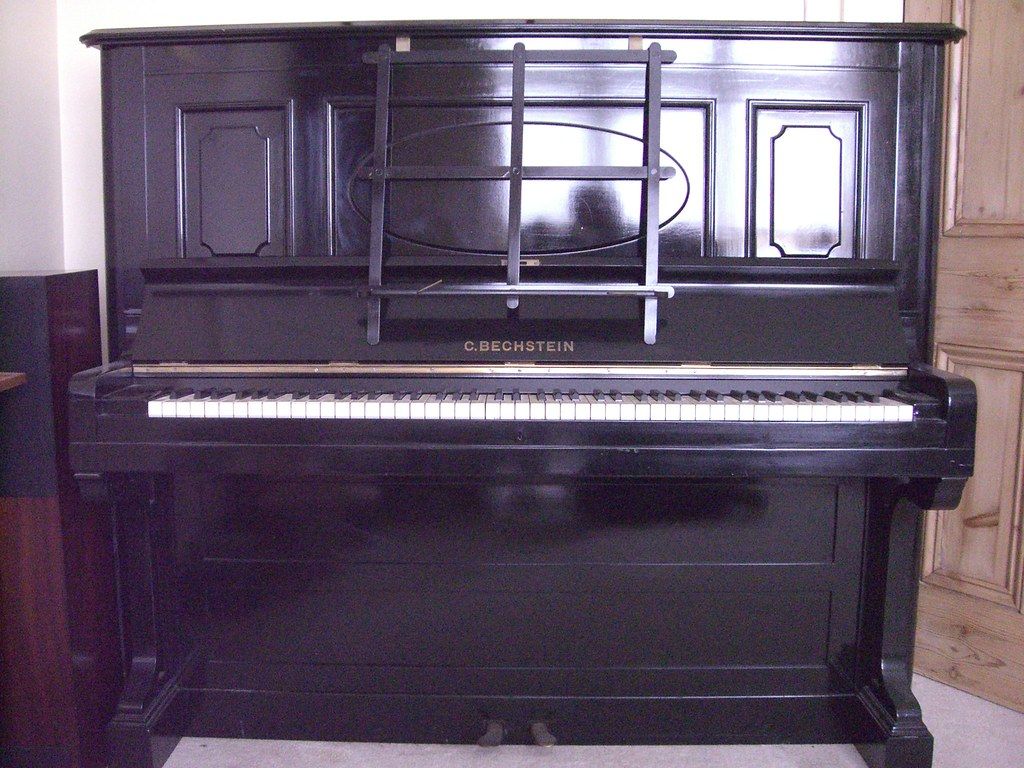
In the 19th century music at home was an ordinary thing. The piano was both the entertainment and the status furniture of the middle-class drawing room; with no radio and no record, the way to listen to music was to play it. In Turkey too, among the first generations of the Republic, the piano was an object of the misafir salonu, the room kept for guests: very often it was displayed more than played, with a lace cloth laid over it. Nobody thought of the neighbour, because the walls were half a metre of solid stone or brick masonry and none of the instruments was plugged into a socket.
The 20th century changed three things at once. Buildings became thinner: the reinforced-concrete frame brought thin non-loadbearing partition walls and floor slabs of 12–15 cm. Instruments became more powerful: the electric guitar, the bass and the drum kit fitted the loudness of an orchestra of a hundred into one room. People began to live one above another. Then a fourth arrived: in 1979 the first four-track recorder working with cassettes came on the market, and the studio moved into the home. Today a laptop computer does more than a whole studio of the 1970s. That is, we make music more loudly than before, between thinner walls and for longer hours. The problem is not personal rudeness; it is a problem of physics and architecture.
02Two separate problems: insulation and acoustics
Sound insulation is preventing sound from passing from one room to another. It is done with layers that are heavy, closed and not touching one another. Room acoustics is how sound behaves inside the room: how long it rings, which notes swell. It is corrected with surfaces that are soft, porous and placed in the right position.
The materials of the two are almost opposite. Foam, mineral wool and carpet absorb sound but let it through; they improve the inside and are of no use to the neighbour. Concrete and plasterboard stop sound but reflect it; they protect the neighbour and make the room ring. A music room needs both, and you need to know which of them you are spending money on.
03Measure first: how is the decibel read?
The decibel is a measure that rises not by addition but by multiplication. Every increase of 10 dB sounds roughly twice as loud to the ear; every increase of 3 dB doubles the sound energy. That is why “we reduced it by only 10 dB” is not a small achievement: the sound has been halved.
The calculation is simple. If the piano plays at 90 dB and the wall cuts 50 dB, 40 dB remains in the neighbour’s room: it is not noticed by day and it disturbs at 23:00. If the drum kit is at 110 dB, 60 dB remains with the neighbour; this is as if someone were speaking in the next room, and it is accepted at no hour. Bass sounds are a difficulty apart: walls stop low sounds far worse than high ones. What the neighbour hears is not the song but a dull thud.
04The physics of insulation: mass, spring, airtightness
Mass. Sound passes to the other side by making the wall vibrate. The heavier the wall, the harder it is to vibrate. The rule is unforgiving: doubling the weight of the wall gains only 5–6 dB. Making a 10 cm wall 20 cm does not even halve the sound level. Insulation by mass alone is an expensive and heavy route.
Spring. The more intelligent route is to build two heavy layers without letting them touch, leaving air and mineral wool between them. The first layer vibrates, the air between is compressed like a spring, and a small part of the vibration reaches the second layer. It gives a far better result than a single wall of the same weight. Its condition is this: the two layers must not be rigidly connected anywhere. If a single screw, a single pipe or a single socket box joins the two sides, the spring is short-circuited.
Airtightness. Sound passes wherever air passes. A gap of 1 cm under the door undoes the work of the whole wall around it. The keyhole, the socket box, the ventilation grille, the hole where the radiator pipe passes through the slab: each is a window. Half of the work of insulation is material, and the other half is sealant and draught strip.
Structure-borne sound. What has been described so far was airborne sound. The second route is harder to notice: if the instrument touches the floor, the vibration passes directly into the concrete and spreads through the building. The feet of the piano, the pedal of the drum kit, the amplifier on the floor, the tempo kept with the heel: the neighbour below hears these not through the wall but through the ceiling. Against airborne sound, mass and airtightness work; against structure-borne sound, a resilient intermediate layer.
05Instrument by instrument: from the least expensive to the most
| Instrument | The real problem | These first (inexpensive) | If that is not enough |
|---|---|---|---|
| Piano | Vibration passing from the feet to the slab; wide range of pitch | Not against the wall shared with the neighbour but an inner wall, 10–15 cm clear of it; vibration-isolating pads under the feet; a thick carpet beneath | A piano fitted with a silent system, or a digital piano; a floating platform |
| Drum kit | Very high level; the pedal stroke travels through the structure | Silent practice heads and cymbals; a practice pad | An electronic kit with a floating platform beneath; for serious work a room within a room, or a rehearsal studio |
| Electric guitar, bass | The amplifier; bass frequencies | Headphone output; raising the amplifier off the floor; a small amplifier | Silent recording with a load box and speaker simulation |
| Strings | High and piercing sound; long practice hours | A practice mute; a room with carpet and curtains | Improving the door and window |
| Wind instruments | Sound in all directions and at a high level | A practice mute; an absorbent curtain in front of the bell | A ready-made practice booth |
| Voice | High level; leakage through window and door | A timetable; draught strip on the door and a heavy curtain | A booth; a double door |
| Recording, mixing | Noise coming from outside; the sound of the room itself | Near-field monitor speakers or headphones; absorbers at the first reflection points | Corner traps; correction by measurement |
One has to be honest about the drum kit: there is no inexpensive way of playing an acoustic kit in a flat without the neighbour hearing it. An electronic kit solves the airborne sound, but the dull stroke of the pedal goes down through the slab to the floor below; a heavy platform standing on resilient mounts is needed beneath it. The realistic solution is very often to practise quietly at home and to go to a rehearsal studio to play loudly.
06Improving the room: in order
Before insulating a room from top to bottom, begin with the weakest link. Money is very often spent in the wrong place, that is, on the wall; whereas the sound is getting out through the door.
- Door. A hollow pressed door insulates as much as a cardboard box. A solid, heavy door leaf, with draught strip round it and a drop seal that lowers and lifts beneath it, gives the greatest gain for the money spent.
- Window. In place of old single glass or spaced double glass, a unit made of two panes of different thickness; adding a second window on the inside is better still. A heavy, pleated curtain does not insulate by itself, but it helps.
- Holes. Sockets, pipe penetrations, grilles. Two socket boxes standing back to back in the wall shared with the neighbour are the thinnest place in the wall.
- Floor. For the floor below: carpet over a thick felt underlay; a separate floating platform under the instrument. The permanent solution is a floating screed poured over a resilient layer and not touching the walls.
- Wall and ceiling. In front of the existing wall, a separate frame that does not touch it, mineral wool between, and two layers of plasterboard over. On the ceiling the same arrangement is made with resilient hangers. At this stage the room becomes 10–15 cm smaller in every direction.
- A room within a room. A shell whose floor, walls and ceiling are separated from the existing structure. It is the only real solution for the drum kit and for loud recording; it is expensive, it takes up space, and an engineer must check whether the slab will carry this load.
Why is it hard to breathe in a well-insulated room? Because a room that does not let sound through does not let air through either. The door with its draught strip and the airtight window close off the ventilation too; an hour later the room warms up and the air grows heavy. The most forgotten part of a music room is silent ventilation: you pass the air through a duct with bends, lined inside with absorber; air can turn the corner and sound cannot. A room built without thinking of this is used with its door open, and all the insulation is wasted.
07How does it sound inside? Room acoustics
The science of room acoustics began in 1895 with a complaint. What was said in Harvard’s new lecture hall could not be understood, and the task was given to Wallace Sabine, a young physics lecturer who had never worked on sound. Sabine went into the hall at night with an organ pipe and a stopwatch; he carried hundreds of seat cushions from the theatre next door and measured the time the sound took to die away against the number of cushions. What he found is the formula still used today: reverberation time increases with the volume of the room and decreases with absorbent surface. A few years later the first concert hall designed with this calculation opened, and it is still counted among the best in the world.
In a small room three things are dealt with:
Reverberation. When you clap your hands in a room with bare walls and a parquet floor you hear a metallic echo. In this room the instrument sounds loud but blurred. The remedy is to make part of the surfaces absorbent. The home’s own furnishings are useful here: a full bookcase, a thick carpet, a fabric armchair, a curtain. But measure matters; a room covered everywhere in foam is bad too, because the high sounds are absorbed, the low sounds remain, and the room turns into a muffled hum.
Room modes. Every room has notes it favours, depending on its dimensions. Sounds whose wavelength fits the length of the room exactly set up a standing wave between the walls; in one place in the room that note booms, and a step away it disappears. In a room of 4 m the first such sound is at about 43 Hz, that is, close to the lowest notes of the bass guitar. The cube-shaped room is the worst, because three dimensions feed the same note. The remedy is thick bass traps placed in the corners, and moving the listening or playing position away from the exact centre of the room.
First reflections. Sound leaving the speaker or the instrument reaches the ear first directly and immediately afterwards by reflection from the side wall, the ceiling and the desk. These early reflections blur the sound. There is an old way of finding their positions: while you are seated, a friend moves a mirror along the wall; the point at which you see the speaker in the mirror is where the absorber is to be hung.
The thickness of the absorber depends on physics too. A porous panel absorbs well sounds with a wavelength of up to roughly four times its thickness. Foam of 5 cm takes only the high sounds; for bass, mineral wool of 10–20 cm with an air gap behind it is needed. This is the reason “studio” rooms lined with thin foam are muffled and boomy. Beside absorbing there is also diffusing: surfaces with recesses of different depths scatter the sound without absorbing it and keep the room lively. An irregularly filled bookcase is the best diffuser in the home.
08The subjects that are skipped: the ear, humidity, electricity, fire
The ear. The musician’s most valuable tool cannot be repaired. The limit recommended by occupational health bodies is 85 dB for eight hours, and with every increase of 3 dB the safe time is halved: one hour at 94 dB, fifteen minutes at 100 dB. In a small room a drum kit or a trumpet exceeds this limit within minutes. A well-absorbed room does not only sound better; it tires less, because reflected sound is a load on the ear as well. For those who practise regularly, musicians’ earplugs are not counted a luxury.
Humidity and temperature. Wooden instruments breathe with the air. Central heating dries the air in winter; the soundboard cracks and the tuning does not hold. The target is 40–60% relative humidity throughout the year. A piano is not placed beside a radiator, in front of a window that takes the sun, or against a cold external wall. There is a contradiction here: the room you close for insulation also traps humidity and heat. Ventilation comes before us again.
Electricity. A continuous hum from the speaker is very often an earthing problem; feeding the devices from the same socket solves most cases. Light dimmers and inexpensive LED drivers put crackle into the recording chain; when the lighting of a music room is chosen, this is asked too. For the music stand a separate light that does not dazzle and does not flicker is needed.
Fire. Most inexpensive acoustic foams ignite easily and give off toxic smoke as they burn. In 2003, in a nightclub in America, sparks from the stage show ignited the insulating foam on the wall; the fire took hold of the hall within a few minutes and 100 people sadly lost their lives. The fire class of every absorber put on wall and ceiling must be asked. Mineral wool does not burn; that is why it is used more than foam in good studios.
Neighbourliness and rules. No insulation takes the place of a timetable that has been talked over. Look at the management plan of the apartment building, tell your neighbour when you play, and go once to their home and listen to your own sound. Very often the problem is uncertainty more than level: a sound whose end is known disturbs less than one whose end is not.
09Three budgets, three rooms
| Level | What is done | What it gains | For whom it is enough |
|---|---|---|---|
| Light | Choice of position, carpet and underlay, draught strip on the door, heavy curtain, bookcase, a few absorbent panels, mute and headphones | Clear improvement inside; a few decibels at the neighbour’s | Guitar, strings, voice, a piano practised by day |
| Medium | Solid door and drop seal, second window, separated lining on the neighbour’s wall, floating platform under the instrument, corner traps, silent ventilation | A reduction at the neighbour’s of roughly half or more | Piano, wind, electronic drum kit, home recording |
| Heavy | A room within a room: floating floor, separated walls and ceiling, double door, ducted ventilation, structural calculation | Insulation that allows practice at night | Acoustic drum kit, loud rehearsal, professional recording |
10What did it bring, what did it take away?
The entry of the studio into the home made music democratic: a room, a computer and a microphone took the place of tools that a generation earlier were in the hands of record companies alone. Silent practice tools enabled someone living in a flat to practise the piano at eleven at night.
There are things it took away too. A musician working with headphones does not hear the room; yet the sound of an instrument is completed by the room in which it is played. “Dead” rooms with every surface covered in absorber give a sound that is clean in the recording and tiring for the person. And even the best insulation goes only so far: an apartment building is not a building designed for making loud music.
What we see when designing an interior is this: acoustics are solved not by panels hung on the wall afterwards but by decisions taken at the start. In which corner of the home will the music room be, which wall will it share with the neighbour, where will its door open, where will its air come from? If these four questions are answered correctly, the rest is detail. If they are answered wrongly, one ends up at the egg carton.