01A claim first: the refrigerator emptied the street
Without refrigeration food cannot be kept; so little is bought, and often. Milk comes every morning, bread every day, meat on the day it will be cooked. This shapes the city: a grocer in every street, a butcher and a greengrocer on the corner, the milkman, the yoghurt seller and the simit seller who come to the door. A neighbourhood means food within walking distance.
The refrigerator loosened this chain. If a week’s food can stay at home, shopping falls to once a week; if it is done once a week it is done by car; if it is done by car it is done at a large store. The supermarket, the car and the refrigerator are three parts of the same arrangement. The reason the neighbourhood grocer is disappearing today is not price competition alone; it is that box in the kitchen. All the objects below are solutions from the world before the box, and most of them work without using energy.
02Keeping cool: the water jar, the meat safe, the larder, block ice
The water jar. An unglazed earthenware vessel, the testi, cools water. It is not magic but physics: water seeping through the porous wall evaporates at the surface and takes the heat needed for evaporation from the water inside. The jar is cool because it sweats. The same principle cools a person who perspires and a watermelon wrapped in a wet cloth. It does not happen in a glazed or plastic vessel; the seeping that looks like the jar’s fault is its whole function.
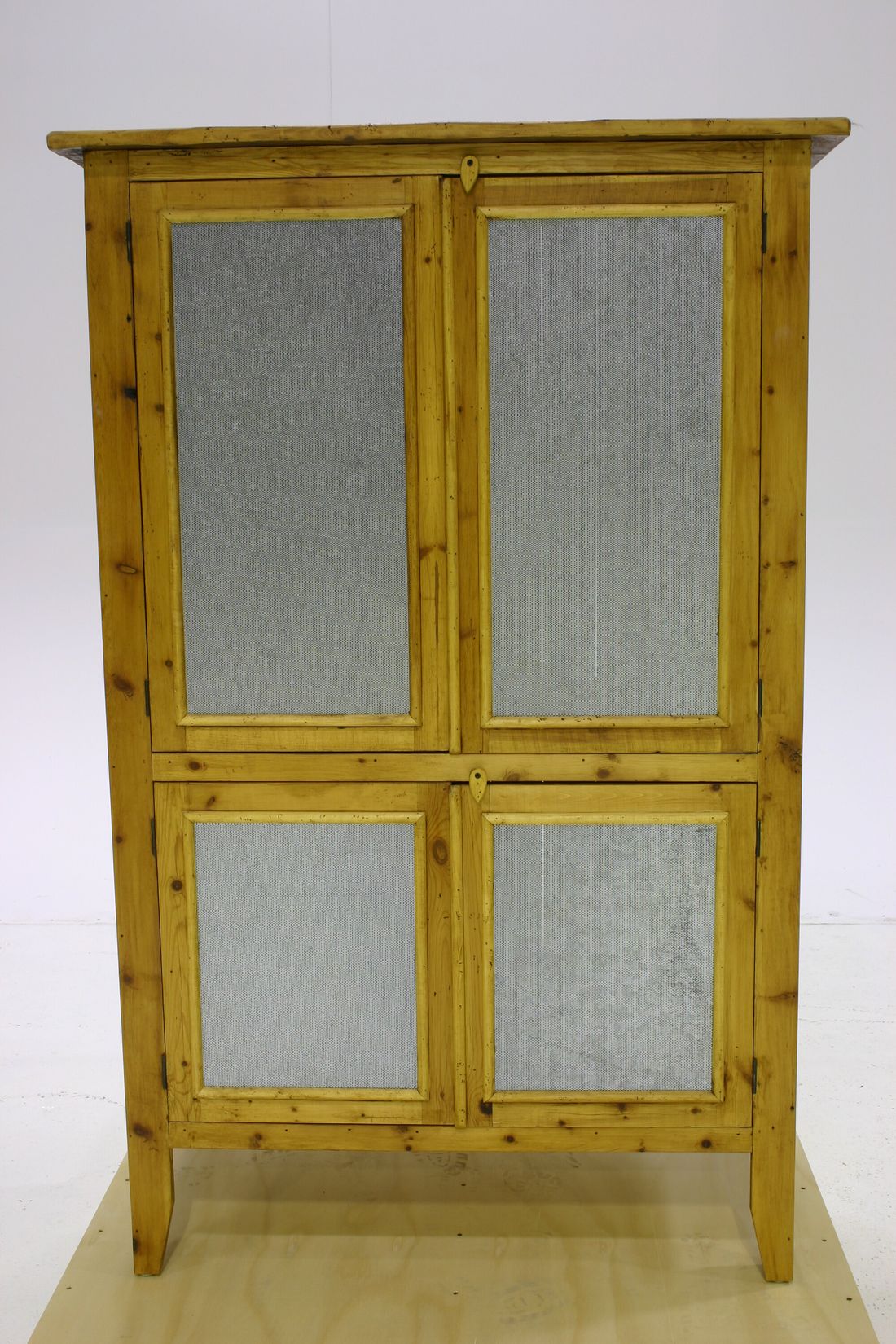
The meat safe. A cupboard with a timber or sheet-metal frame, covered on four sides with fine mesh; in Turkish, the tel dolap, the “wire cupboard”. It is hung on a north-facing balcony, in front of a window or on a wall in the shade. What it does takes three words: shade, airflow, flies. The mesh lets the air through and keeps the flies out; the food inside stands in the shade and the breeze, a few degrees below room temperature. Last night’s leftovers, cheese, butter and eggs are put there. In some homes it was designed together with the wall, as a mesh compartment projecting outside the kitchen window and opening outwards.
The larder. A room on the north side of the house with a small window and thick walls, or a compartment in the basement. It does not cool; it keeps the temperature steady and low. The larder is the store of a seasonal economy: the plenty of summer is carried into winter. Tomato paste is thickened in the sun, peppers and aubergines are threaded on string and dried, pickles are made, jam is boiled, tarhana and noodles are prepared, meat is braised and pressed into jars in its own fat. All of these do the same job: keeping water, air or microbes away from the food. Salt, sugar, vinegar, fat and sun are the five preservers that stand in for refrigeration. This work is not for one person; neighbours and relatives gather and the cauldron boils in common. Preparing for winter was an institution of neighbourliness as much as a technique of storage.
Block ice. In the city ice was sold in summer: large blocks from the ice house were wrapped in sacking and delivered to homes and shops. At home the ice was put in a wooden cabinet lined with zinc, and food was kept beside it for a day or two. The Turkish word for refrigerator, buzdolabı, “ice cupboard”, comes from here: the first cupboard really was a cupboard that ice was put into.
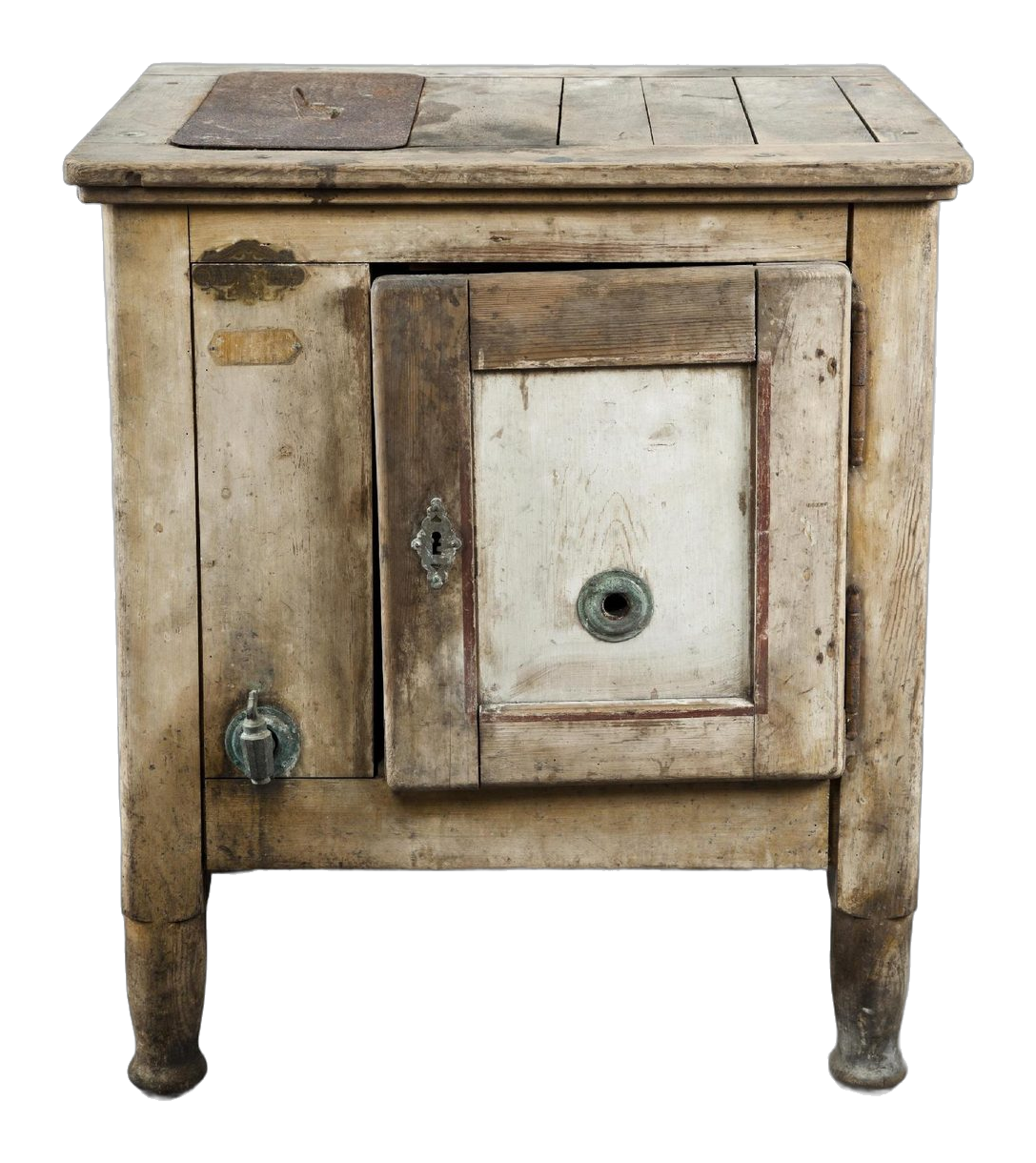
The refrigerator. It began to be produced in Turkey in 1960 and entered every home within a generation. What it brought was not only cold but time: food could be kept for several days, leftovers were not thrown away, shopping could be put off. In return it made the larder, the meat safe and most of the preparation for winter unnecessary. It also changed the layout of the kitchen: a third fixed point arrived beside the cooker and the sink, and the kitchen plan has been drawn around this triangle ever since.
03Cooking: charcoal burner, paraffin stove, pressure cooker, tinned copper
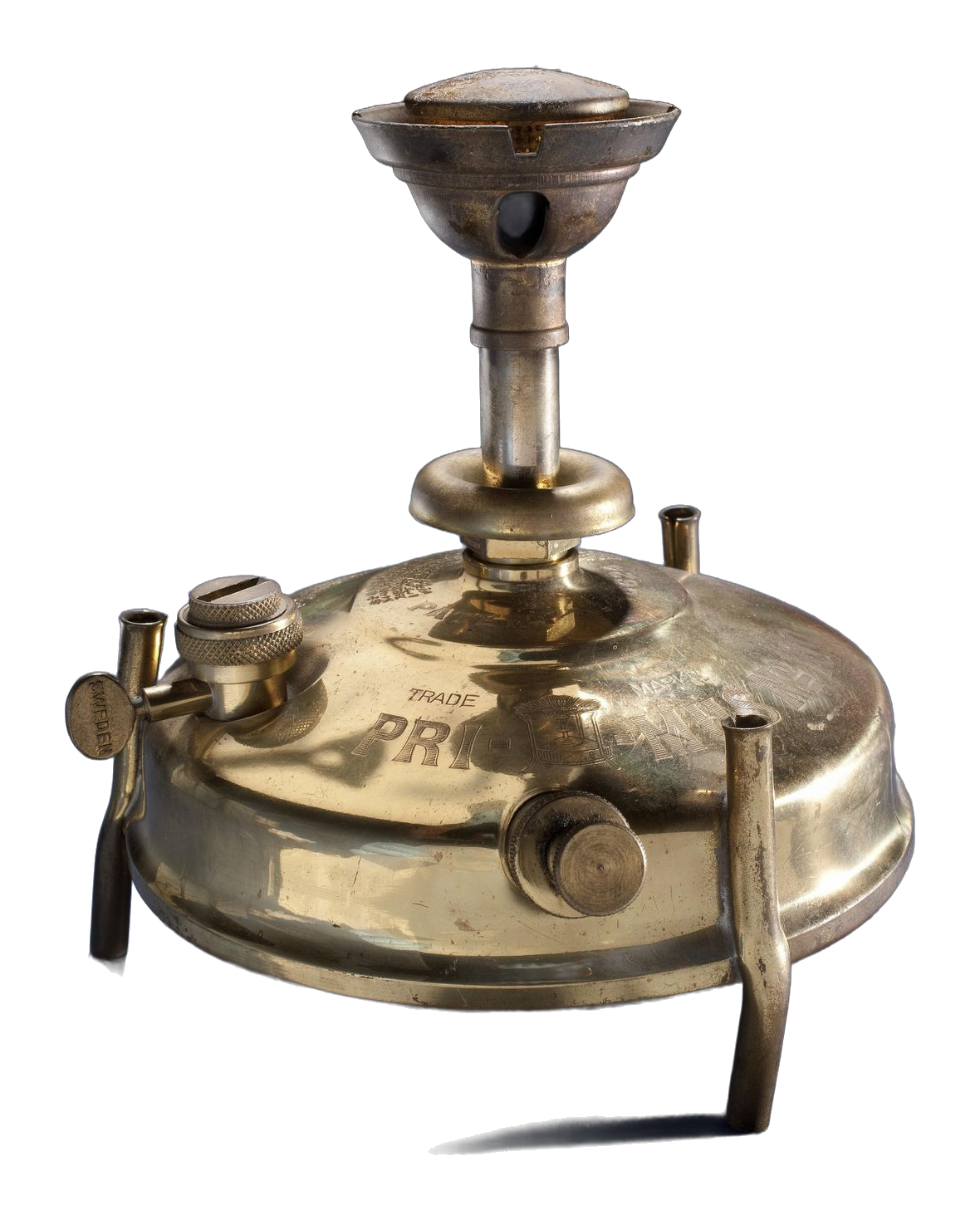
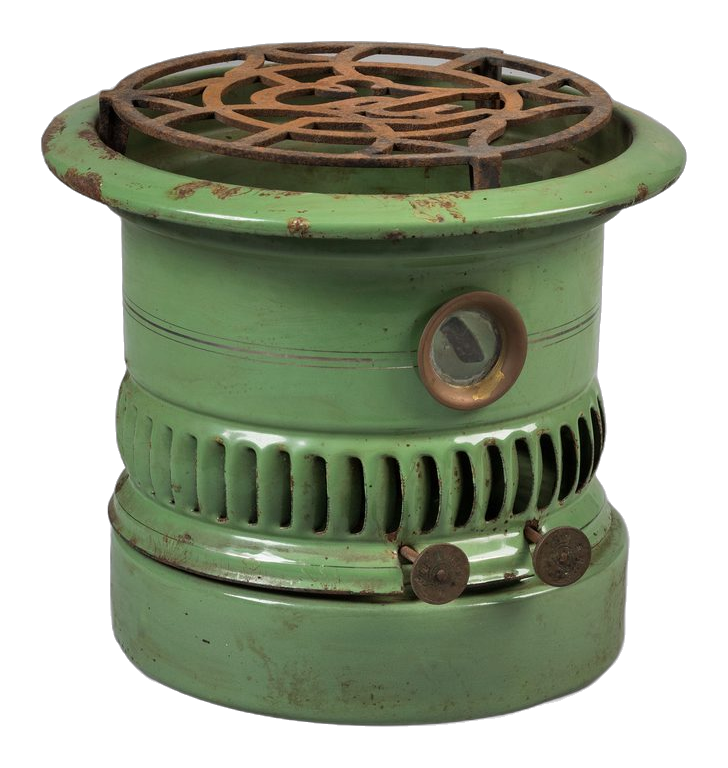
The charcoal burner and the paraffin stove. Before bottled gas, food was cooked on a small charcoal burner, the maltız, or on a paraffin stove pressurised by pumping. Both are slow, sooty fires that ask for attention. The leaning of Turkish cooking towards pot dishes cooked for a long time over a low fire is the nature of these fires as much as a preference of taste: charcoal once lit stays hot for hours, and that heat should not be wasted. When cookers arrived that turn the fire on and off at once, quickly cooked dishes multiplied too.
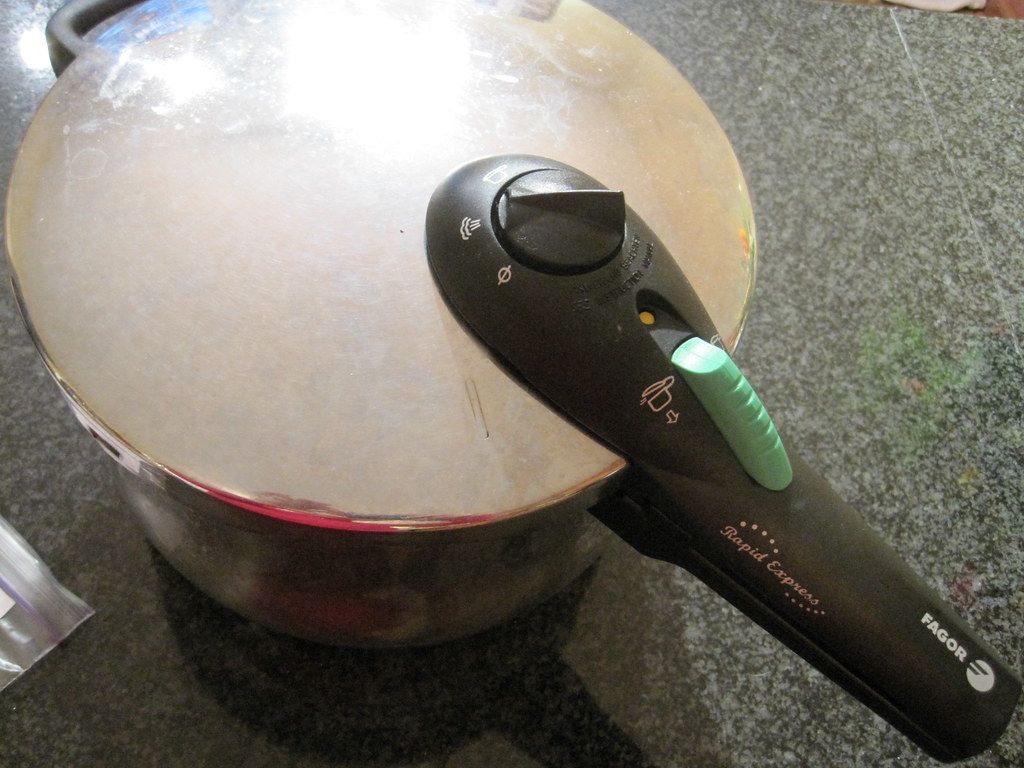
The pressure cooker. The idea goes back to 1679, to a French physicist’s steam vessel; its entry into the home came in the 20th century. Its principle is plain: in a pot with a sealed lid steam builds up, the pressure rises, and water boils not at 100 °C but at about 120 °C. Twenty degrees more brings the cooking time down to as little as a quarter. Dishes that ask for hours, such as chickpeas, dried beans and meat, are ready in half an hour.
In Turkey, from the 1970s on, the pressure cooker became the pot of both the working woman and expensive bottled gas: when the time shortens, the fuel falls too. Its feared side is a legend as well: a blocked valve and dried beans stuck to the ceiling is a story every family tells. Today’s models have more than one safety device, but that hissing still sends children out of the kitchen.
Tinned copper. For centuries the pot, the pan and the dish were of copper, because copper conducts heat very well and evenly; food does not catch on the bottom. Its fault is that in contact with food it forms poisonous compounds. The solution is to coat the inside of the vessel with a thin layer of tin, and this layer wears away with time. So a tinsmith came to the neighbourhood regularly: with his bellows, his fire and his sal ammoniac he heated the vessels in the street and spread the molten tin with a wad of cotton. Aluminium and steel pots made him unnecessary. Nothing has really replaced copper; a layer of copper or aluminium is still embedded in the base of good pots today.
04Where were meals eaten? The tray, the floor table and the dining table
In the traditional arrangement there is no dining room. When mealtime comes a cloth is spread in the middle of the room, a low stand and a large round tray, the sini, are set on it; the family sits around it and eats from the dish in the middle. When the meal is over the tray is lifted, the cloth is shaken out and the room is a sitting room again. The table is not a piece of furniture but an arrangement that is set up and cleared away.
The architectural consequence of this is large: a fixed dining table and six chairs occupy half a room permanently. The floor table occupies no room at all. A house made of small rooms with many uses can work only in this way. The move to the table was a sign of modernity in the early years of the Republic, and the dining-room suite became the most expensive furniture of the guest salon. Today in many homes that large table stands empty for weeks and the family eats at the kitchen worktop; that is, two generations later we are weighing the cost of the fixed table once more.
The kitchen itself was at the back of the house too. It was a small, enclosed room, very often facing north and onto the light well; its door was kept shut so that smoke, smell and steam would not enter the living rooms. Whoever worked there was cut off from the rest of the house.
The person who first designed this room as a working tool has a link with Turkey. In 1926 the Austrian architect Margarete Schütte-Lihotzky drew a kitchen for the workers’ housing of Frankfurt: in a room of 1.9 × 3.4 m, an arrangement inspired by the kitchens of railway carriages, in which everything stood within arm’s reach. It was made in a factory and fitted in about 10,000 flats, and it is regarded as the ancestor of today’s fitted kitchen. Schütte-Lihotzky was invited to Istanbul in 1938 and worked for some two years at the Academy of Fine Arts. Her kitchen was efficient, and it shut the woman alone in a small room; the criticism of later generations came from here. The open-plan kitchen is the answer to that criticism: the person who cooks no longer turns their back on the family.
05Shopping: the milkman, the grocer’s book, the basket on a rope
Those who came to the door. The milkman came every morning with his churn; the milk was measured into the household’s own vessel and boiled at once, because raw milk does not last even a day. The yoghurt seller passed with his pole on his shoulder, the simit seller with his tray on his head, the boza seller with his call on a winter night, the rag-and-bone man with his sack. Each had a call of his own, and the sound of the street was made of these calls. For the seller there was no shop rent; for the customer, no walk.
The basket on a rope. The most graceful invention of the apartment block without a lift: a wicker basket lowered from the window on a rope. Money is put in it and one calls down to the seller or to the grocer’s boy below; the basket is pulled back up with bread, a newspaper, tomatoes. A rope and a pulley in place of five flights of stairs down and up. The basket meant that the old, the sick and the mother with small children could shop without leaving home. For it to work, two things are needed: a building low enough for a voice to be heard from the window, and trust between you and the seller. In the high-rise, double-glazed, gated estate there is neither; phone applications have taken the place of the basket. The job is the same, the distance is different.
The grocer’s book. The neighbourhood grocer was more than a shop: he kept a credit book, the veresiye defteri, that is, he gave interest-free credit until the end of the month; keys were left with him, messages were passed on, a child was sent on errands. The book was the bank of an economy in which wages came once a month and cash was scarce. The credit card and the chain store made it unnecessary; the way the neighbourhood knew one another weakened with it.
The neighbour’s door. If the grocer was shut, the nearest larder was the flat opposite. When the flour ran out in the middle of cooking, a child was sent to the neighbour with a glass: “My mother asks for a glass of flour.” Pasta, an onion, an egg, a pinch of salt came and went in the same way. This exchange had an unwritten rule: the vessel does not come back empty. The borrowed glass was returned the next day with a slice of cake in it, or a bowl of aşure, the pudding shared among neighbours. In a city where the supermarket is open until midnight and the order arrives at the door, nobody runs out of flour; nor is there any pretext left for knocking on the neighbour’s door.
The string bag and the wire trolley. Shopping was done with a container brought from home. The string bag, the file, knitted of cord, takes up as much room as the palm of a hand, carries a watermelon when opened, and is used for years. To the street market one goes with a two-wheeled wire trolley: a light cage of steel wire and a handle pulled from behind. Its design is of a faultless plainness; the wire carries, shows what is inside and can be washed, and when empty it weighs almost nothing. Its squeak in the street was the sound of market day.
The plastic carrier bag ended both. Developed in the 1960s and cut from a single piece of plastic with its handles, it was so inexpensive that it was given away, and for a generation even the name of the string bag was forgotten. The rest is known: in Turkey carrier bags have been sold for a charge since 2019, and the string bag has come back under the name of the cloth bag. The wire market trolley never left; it was merely covered in fabric.
06The bottle: the deposit and the glass that came back
Milk, soft drinks, mineral water and beer were sold in glass bottles, and the bottle belonged to the seller. When you bought the drink you paid a small deposit for the bottle and got it back when you returned the empty. The wooden crates in front of the grocer’s were the road by which the collected empties went back to the factory. The bottle was washed and refilled tens of times. For children, collecting empty bottles was a source of pocket money.
This arrangement decided the form of the bottle as well. A returnable bottle has to be thick and heavy, because it will be washed and carried many times; its mouth and height are standard, to suit the machine. Every town had its own soft drink, because carrying heavy glass bottles a long way is expensive; local brands of gazoz, the Turkish lemonade, were the result of a transport calculation as much as of taste. When the light plastic bottle and the can arrived, a drink could travel to the other end of the country, most of the local brands closed, and the bottle turned into single-use waste.
Today the deposit is being brought back by law, on environmental grounds. That is, we are trying to set up again, with machines and regulations, the arrangement that the grocer ran of his own accord two generations ago.
Why is the kitchen always on the north side in old houses? Because the north façade gets no sun and is the coolest side all year. In a home where food is kept in the meat safe, the larder and on the worktop, putting the kitchen on the south is putting the food in the sun. The refrigerator removed this necessity; today we can open the kitchen to the view and to the sun. But those who move the kitchen to the south when renovating an old flat still pay for it in summer: the room that produces the most heat has come to the façade that gets the most sun.
07Side by side
| Object or arrangement | How it works | What it needs in the home and the city | What ended it | Today |
|---|---|---|---|---|
| Water jar | Cools by evaporation | Shade, breeze | The refrigerator, bottled water | At the summer house, in the garden |
| Meat safe | Shade and airflow | North balcony, outside the window | The refrigerator | In the countryside; in use again for cheese and vegetables |
| Larder and winter stores | Coolness; salt, sugar, vinegar, sun | A north room, a basement, a flat roof | The refrigerator, the supermarket, the smaller flat | Continuing, in decline |
| Block ice | Cools as it melts | An ice house, daily delivery | The refrigerator | At the fishmonger’s |
| Charcoal burner, paraffin stove | Charcoal, pressurised lamp oil | A ventilated kitchen | Bottled gas | The camping stove |
| Pressure cooker | 120 °C under pressure | A sturdy hob | It has not ended | Common; an electric version has appeared |
| Tinned copper | Conducts well, tin protects | The neighbourhood tinsmith | Aluminium, steel | In restaurants, among enthusiasts |
| Tray and floor table | Set up, cleared away | The empty floor of a room | The dining table | In the countryside; at large gatherings |
| Milkman, basket, grocer’s book | Daily, on credit, by voice | A low building, a familiar street | The refrigerator, the supermarket, the card | Phone applications |
| String bag, wire trolley | A container brought from home | A market within walking distance | The plastic carrier bag, the car | They have come back |
| Deposit bottle | Washed and refilled | A local producer, a grocer | The plastic bottle, long-distance transport | Coming back by law |
08What did it bring, what did it take away?
The refrigerator and what came after it brought one of the greatest comforts in human history: food poisoning fell, fresh vegetables could be eaten in winter, and the work of storing and daily shopping, which took a large part of a woman’s day, grew lighter. Nobody misses boiling the milk every morning, or having to finish the meat the same day in summer.
What it took away should be read as a system. The old kitchen produced almost no waste: the bottle went back, the string bag was used again, vegetable peelings went to the animals, and leftover bread became the next day’s dish. It cooled without using energy, ate in season and shopped on foot. Most of the things we are trying to reinvent today as “sustainable” were the ordinary habits of that kitchen; they were born of poverty and necessity, but they worked.
The second loss is the neighbourhood. The seller who came to the door, the grocer who wrote on credit and the basket hanging from the window turned shopping into a relationship of acquaintance. The weekly supermarket shop is cheaper and quicker, and it requires speaking to no one.
The lesson for design is not to go back to the old objects but to carry their principles into today’s home. A small ventilated larder cupboard on the north side reduces the load and the size of the refrigerator. The orientation of the kitchen, its window and its ventilation should be thought about before which appliance is to be bought. And the first question to ask when planning a kitchen is still the same: in this home, how is food bought, where is it kept, who cooks it and where is it eaten? The island is not the answer to these questions; it is only one of the answers.