01Where did this idea come from? Bars, networks and a skyscraper
The bar chart we call a programme of works spread in the 1910s under the name of the American engineer Henry Gantt. It was the period in which work was measured with a stopwatch in factories and efficiency had become almost a belief. Gantt’s chart made a simple thing visible: which task begins when, when it ends, and where we are today.
The most famous site showing what the method can do is in New York. The Empire State Building rose in 1930–31, after the demolition of an old hotel, in 410 days. The steel frame advanced by about four and a half storeys a week; up to 3,400 workers a day were on the site. The secret was that the work was set up like an assembly line: the steel came from the factory in sequence and went up to its place without waiting in a store, because in the middle of Manhattan there was nowhere to keep material waiting. The constraint gave birth to the method. It had its price too: during construction at least five workers sadly lost their lives. And one more lesson: the building opened in the middle of the Great Depression and stayed half empty for years. Managing a site flawlessly does not mean that the building was built at the right time.
The second great step was taken in the Cold War. In 1957 two engineers, from a chemical company and a computer company, developed the critical path method to plan large maintenance works. Immediately afterwards the American navy set up a similar network method for a missile programme on which thousands of contractors worked. Both asked the same question: if which of these tasks is late will the whole project be late? The computer was needed for the method to appear, because the links between thousands of tasks could not be calculated by hand. In the 1970s more than four fifths of America’s large construction firms were using this method.
The third step is more modest and, in my view, the most important. In the 1990s two researchers followed weekly plans on sites one by one and found something uncomfortable: a considerable part of the tasks declared at the start of the week as “to be done this week” had not been done by its end. The problem was not in the large programme; it was on Monday morning. We return to this below.
02What is a programme of works really for?
A good programme answers three questions. Which task is waiting for which? Which material must be ordered when? If something goes wrong, what can I move and what can I not? The chart looking well on the wall provides none of these three.
The value of a programme is measured in money. A team coming to site and going back without finding work means that day’s wages. Work done in the wrong order is work done twice: a services chase opened after painting calls back both the plasterer and the painter. A late handover returns as rent, interest and reputation. The figures for these are the subject of a separate article on the cost of cheap construction; here we look at how it is prevented.
03The golden rule: wet trades first, dry trades after, dusty work first of all
The sequence of an interior site is not arbitrary; physics sets it. Every task that contains water (plaster, screed, gypsum, tile adhesive) needs to dry, and until it dries it spoils the work that comes on top of it. Every task that raises dust is the enemy of a finished surface. Three rules follow:
- Breaking out and chasing at the very start. Dust and rubble must be finished before any other work begins.
- Everything that goes inside the wall before the plaster. Electrical conduit, water and heating pipework, air-conditioning pipes. The pressure test is also carried out before plastering; a leak behind the plaster is the most expensive leak.
- No dry trade begins before the wet trades have dried. Timber flooring, furniture and the final coat of paint wait for the humidity in the space to fall.
The item most often forgotten is drying time, because on the chart it does not look like “work”. For cement-based screed the common rule is this: for the first 4 cm, roughly one week for every centimetre. To lay timber on a screed of 5 cm it is necessary to wait more than a month. If this time is not written into the programme as an item of work, the parquet is laid on damp screed and lifts in the first winter.
04The critical path: which delay delays everyone?
When you link the tasks to one another with arrows, a network emerges. In this network the longest chain from start to finish is called the critical path. If a task in that chain is one day late, the handover is one day late too. The tasks outside the chain, by contrast, have a margin: if they slip a few days the handover is not affected. This margin is called float.
A manager’s attention is limited, and the critical path says where that attention is to be spent. The task on the critical path is given the best team, the earliest material and daily checking. In tasks with float, flexibility is a resource: on a rainy day, or on a morning when a team has not come, the next task is drawn from there.
A warning: as float is spent, the critical path moves. If the kitchen order, with three weeks of float, is forgotten for three weeks, it is now the most critical task of the project. On sites that make the programme once and hang it on the wall, delay generally comes from here.
05Planning backwards: first the order, then the pickaxe
Sites are very often late not because of labour but because of material. The remedy is to read the programme in reverse: subtract the lead time from the day of installation and you have the day of the order; subtract from that the time for deciding and measuring and you have the day of selection.
A duty for the owner follows from this too. If the colour of the tiles is to be chosen after the screed has been laid, the programme is already late. In a well-managed job the decisions have a calendar as well, and this calendar is signed together with the client. Indecision is the most expensive material on site.
06The weather: how does the programme follow the sky?
The weather is the one partner on site with whom there is no bargaining. One does not plan against it; one plans with it. The way to do so is always to keep in hand a list of “inside work” and a list of “outside work”; when the weather turns the team is not left idle, and the list changes.
| Weather | Work to postpone | Work to bring forward | Why |
|---|---|---|---|
| Rain | External painting and rendering, roof waterproofing, concrete pours, excavation | Internal services, electrics, plasterboard, workshop fabrication | Waterproofing does not bond to a wet surface; fresh render and paint are washed off |
| Frost and below +5 °C | Concrete, screed, plaster, tiling, external painting | Strip-out, dry systems, mechanical installation | Cement cannot gain strength in the cold; water that freezes cracks the mortar from within |
| Extreme heat and dry wind | Concrete and plaster at midday | The same work early in the morning or in the evening; inside work during the day | Water evaporates quickly and the surface cracks; watering and covering are needed |
| Strong wind | Crane work, work on scaffolding, façade cladding, roof | Ground floor and inside work | Safety; there is no bargaining over it |
| High humidity | Timber flooring, final coat of paint, varnish | Rough work, installation | Timber takes up moisture and then shrinks; paint dries late and leaves marks |
The season also sets the skeleton of the programme. In a city with a hard winter such as Ankara, the concrete work of the structure is finished, if possible, before the frost arrives; if the building enters winter closed, work continues inside. To begin interior finishes before the roof and façade are closed is to invite the rain onto the site. In interior refurbishment the weather is less decisive, but it cannot be ignored: in an unheated flat in winter the screed does not dry for weeks, and in a flat without air conditioning in summer the paint dries too fast and leaves roller marks.
Why do craftsmen say “let the weather clear, then we will pour”? Concrete hardens by a chemical reaction, and this reaction slows in the cold and almost stops as it nears freezing point. If the water inside it freezes at that time it expands and breaks apart, from within, concrete that has not yet gained strength. Concrete can be poured in winter, but it asks for heating, covering and admixtures; all of these mean money and a place in the programme. The craftsman’s sentence is not idleness; it is chemistry.
07The Monday morning problem: the weekly plan
The large programme looks at months; the site lives by days. What the two researchers found on sites in the 1990s was this: most delays came not from large errors of calculation but from weekly promises not being kept. The reasons were always the same: the drawing had not arrived, the material had not arrived, the previous team had not cleared the area, the scaffolding had not been erected, the priority had changed.
The remedy they proposed is plain and works at every scale:
- Look six weeks ahead. For every task of the coming six weeks, list the obstacles now: drawing, material, team, area, permit. A task whose obstacle has not been removed cannot enter the weekly plan.
- Let the person who will do the work give the promise. Make the weekly plan not as a manager in the office but together with the foreman. He knows the difference between “should be done” and “can be done”.
- Measure the proportion of promises kept. At the end of the week, what percentage of the promised tasks was finished? What was the reason for those not finished?
- Remove the reasons. If the same reason appears three weeks in a row, the problem is not in the team; it is in the system.
There is a psychological side here too. A team working to a programme in which it can keep its word trusts the programme and prepares accordingly. In a programme that breaks down every week, everyone hides their own margin: the craftsman says five days for work he would call three, the manager does not believe this and writes two, and the chart turns into a piece of paper nobody takes seriously.
08Scale 1: the refurbishment of a flat or an office
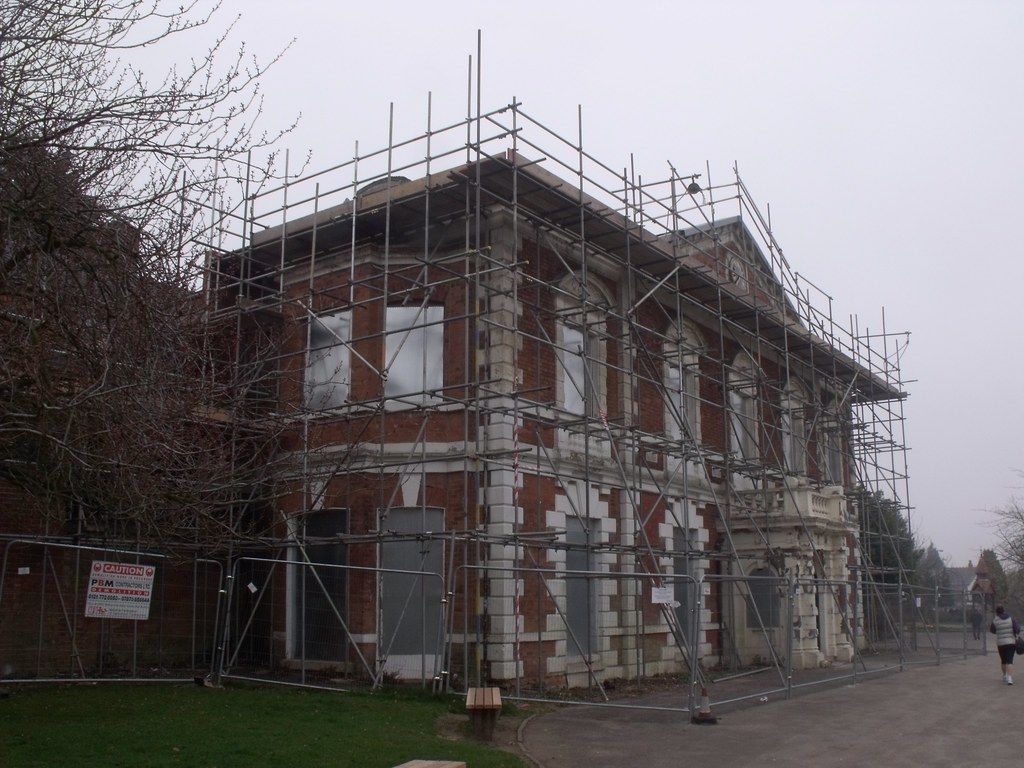
The particular difficulty of refurbishment is that the building is alive. The neighbours, the working hours in the building’s management plan, the lift, the car park, the removal of rubble: all of these are part of the programme, and most are forgotten in the first chart.
- Remake the programme after strip-out. In an old building nobody knows what is behind the wall. A corroded pipe, an unrecorded column, layer upon layer of old finishes. The programme based on the first survey is an estimate; the real programme is made after strip-out is complete. Putting an allowance of 10–15% on time and budget from the start is not optimism; it is experience.
- Gather the noisy work. Compressing breaking and drilling into a few days is right for both neighbourliness and efficiency. Quiet work (painting, installation) can be spread over flexible hours.
- Do not stack teams in a small area. If three teams work on the same day in a flat of 100 m², all three work at half efficiency. A sequence that advances room by room is faster than everyone being everywhere at once.
- Bring material on its day. A flat has no store. Tiles that arrive early block the corridor, and those that arrive late keep the tiler waiting. The lesson of the Empire State holds in an apartment flat too.
- Work in phases in an occupied home. If the home cannot be vacated, the work is divided into zones, and the next is not begun until each zone has been finished and handed over. It takes longer; this has to be said at the start.
09Scale 2: the construction of a new building
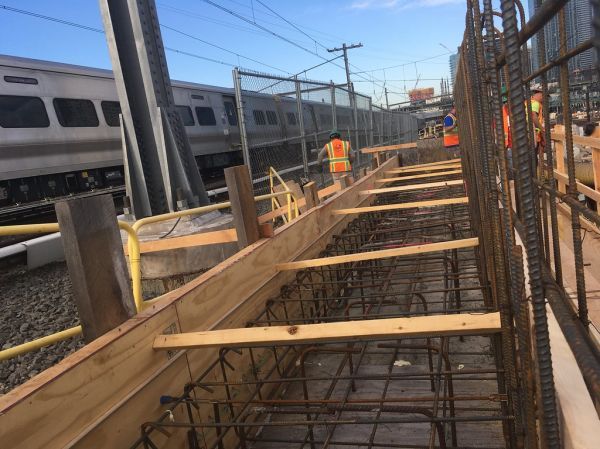
At the scale of construction the rules are the same, but two things change: the weather becomes decisive, and repeated work gains a rhythm.
- The structure is fitted to the season. Excavation and foundations are not left to the rainy period, nor concrete work to the frost. The aim is to close the building with roof and windows before winter arrives.
- A floor cycle is set up. Formwork, reinforcement, concrete, waiting, striking: every floor repeats in the same order. On the first floors the cycle is slow, and it shortens as the team learns. The programme takes this learning into account.
- The trades follow the floors in turn. As the services installer finishes the third floor and moves to the fourth, the plasterer enters the third. If the teams advance one behind another at the same speed, nobody waits for anybody. If the fast team catches up with the slow team, the fast one stops; that is why the aim is not the fastest team but an equal pace.
- The site layout is part of the programme. The reach of the crane, the place where material is set down, the turning of the lorry. A stock of reinforcement put in the wrong place loses a few hours every day for months.
- Safety does not slow the work; it prevents interruption. An accident is the longest delay a programme can see, and its cost is not measured in time alone. The time set aside for scaffolding, guard rails and personal protective equipment is inside the programme, not outside it.
10Moments of decision: speed up or wait?
| Situation | What looks attractive | The right course |
|---|---|---|
| The work is late and handover is approaching | Putting more craftsmen on every task | Adding resources only to the task on the critical path; a craftsman added to the others does not bring the handover forward |
| The screed has not yet dried | Laying the parquet and finishing the job | Measuring the moisture; if necessary speeding the drying with heating and dehumidification |
| Material is late | Keeping the team waiting | Bringing forward another task that has float; if there is none, releasing the team and giving a new date |
| The client asks for a change | Saying “we will sort it out” | Writing down the effect of the change on time and cost, obtaining approval, and then starting |
| A team has finished early | Calling the next team immediately | Checking the work first; work that comes on top of defective work buries the defect |
Overtime and a crowded team gain less than is supposed. A team doubled in a narrow area does not produce twice the work; a tired team makes mistakes, and correcting the mistake takes back the day that was gained. The inexpensive way to speed up is almost always not to work more but to reduce waiting.
11What did it bring, what did it take away?
Planning methods brought foresight to the site: the speed of the Empire State is the proof of the idea of sequenced delivery and the floor cycle, applied today even on an ordinary housing site. The critical path taught where attention is to be spent. The weekly plan method, for its part, brought the craftsman’s knowledge to the table.
There are things they took away too. Computer programs produce handsome charts, and a handsome chart easily takes the place of reality. A programme of thousands of lines can turn into a document nobody on site reads. The price of the passion for speed is clear as well: the record sites of the last century rose in safety conditions that would not be accepted today. Good management is not fast management; it is management that flows. A site that flows looks calm, because nobody runs and nobody waits.
What we have seen since 2014 on factory, office, restaurant, hospital and housing sites is always the same: the jobs that go best are not those on which the most work is done but those that are best sequenced. The programme is not a piece of paper; it is a promise given anew every Monday.