01When the source changes, the lamp changes
The whole history of lamp design fits into a single sentence: whatever the light source is, the lamp solves its problem. The problem of the candle was that it dripped and went out; the candlestick held it high and upright. The problem of the gas lamp was soot and fire; the glass globe enclosed the flame. The problem of the incandescent bulb was an entirely different one: it was too bright.
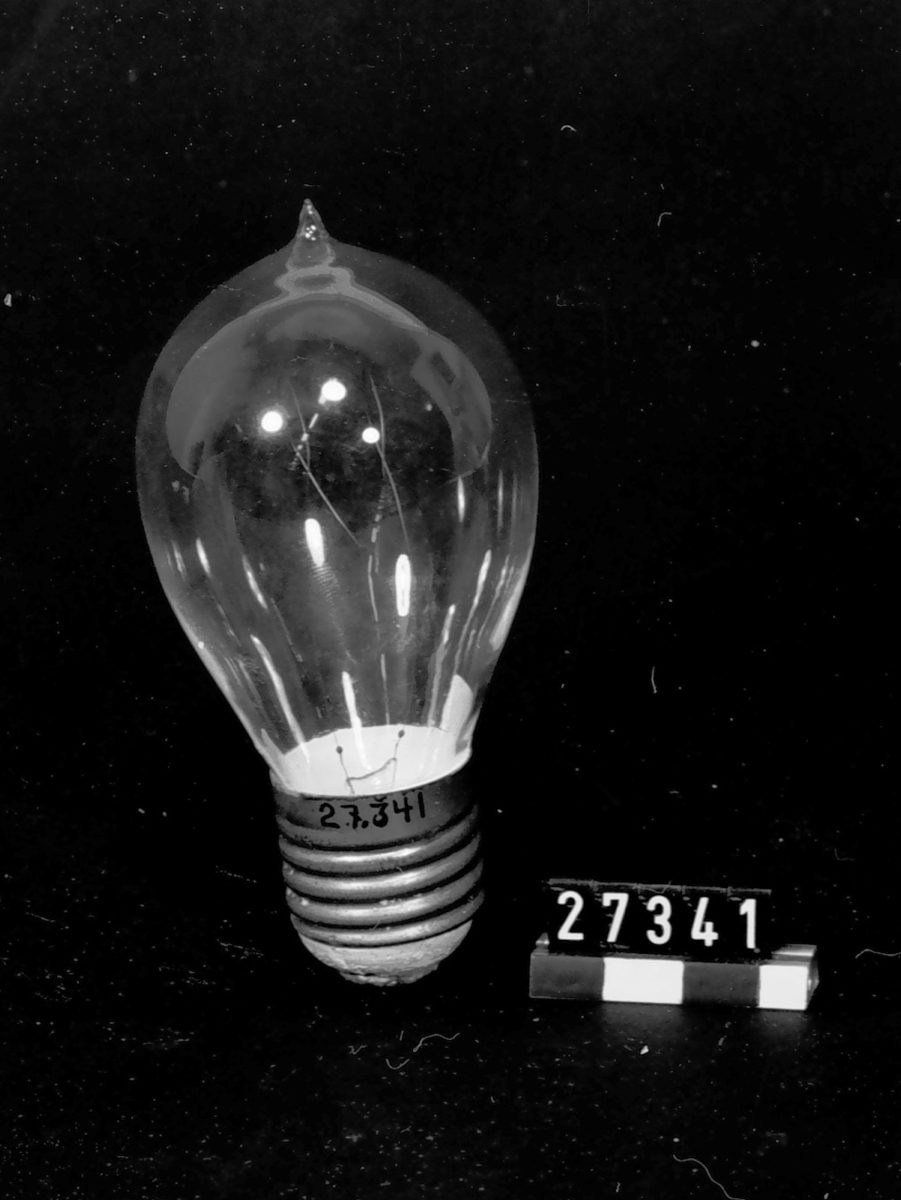
The bulb, which became commercial in 1879, took soot and flame out of the home; but a bare filament was a point too bright to look at. The first electric lamps kept the appearance of gas lamps exactly: brass arms, frosted glass globes, fabric shades with tassels. The shade was there not for decoration but to protect the eye from the bare filament. The great lamp designers of the twentieth century are those who took this problem seriously: hiding the light, directing it, softening it. How light is to be used is the subject of a separate article on lighting; this article is the story of the object that gives the light.
02The war on glare: Poul Henningsen
A company founded in Copenhagen in 1874 had begun by importing wine. When the city’s second power station opened, the family opened a shop for lighting and electrical supplies. The meeting that makes the company’s name known today took place in 1924: they began to work with the architect and writer Poul Henningsen.
Henningsen’s concern was scientific. He saw that the bare bulb tired the eye, while a single shade swallowed most of the light. His solution was three shades: three curved surfaces, one inside another and of different diameters, each catching part of the light and reflecting it downwards and outwards. From whatever angle you look, you cannot see the bulb; yet the light is not lost. The first large commission, in 1926, was the lighting of a new exhibition hall in Copenhagen. By 1931 about thirty thousand lamps had been sold.
In 1958 two mature forms of the same idea appeared. PH 5 was designed to be hung low above the dining table; the surfaces between the shades warm the light. The Artichoke consists of layer upon layer of leaves; each leaf both hides the bulb and passes the light on to the one below. Both have been in production for more than sixty years.
What Henningsen taught is not a form but a sequence: first decide where the light is to go, then draw the surface that will take it there. Most lamps that reverse this sequence, that is, for which a beautiful shade is drawn first and a bulb put inside afterwards, either dazzle or leave the room dim.
Why are the lamps in Scandinavian homes low and numerous? In long, dark winters a single powerful ceiling light turns the room into an operating theatre. Henningsen’s generation divided the light: a low pendant above the table, a reading lamp beside the armchair, a small light in front of the window. Each hides its bulb. The domestic light that we describe today as “warm” is a solution imposed by a climate.
03Spring and balance: the family tree of the task lamp
The lamp of a suspension engineer. George Carwardine was an English engineer who worked on car suspension. In 1932 he patented a new spring mechanism that moved to the desired position at the lightest touch and stayed there when released. He was looking for a use for the invention; he found it in a lamp that gives its light exactly at the point required. He gave its production to a spring factory. The first model was for workshops and factories; it was followed by the domestic version with its three-stepped base and 25 W bulb. The lamp resembles the human arm: shoulder, elbow, wrist. The work of the springs is the work of the muscles.
This mechanism was produced again under licence in Norway in 1937, and that derivative became the standard lamp of architects’ and engineers’ desks across the world. Together with its countless copies whose designers are unknown, the spring-armed lamp is perhaps the most widely used lamp of the twentieth century.
Balance without springs. The desk lamp that Richard Sapper designed for an Italian manufacturer in 1972 solved the same problem without springs. The arms are held in balance by counterweights; it is pushed with one finger and stays where it is left. Its second invention is electrical: the transformer is in the base, and the low voltage passes directly through the arms, without the need for a cable, to the small halogen bulb in the head. No cable, slender, black. A new light source, the small halogen bulb, had made a new form possible.
The visible mechanism. In 1987 Michele De Lucchi and Giancarlo Fassina added one more link to the same family tree: polished aluminium arms, springs concealed inside the arms, and slender tension cables visible on the outside. The mechanism is not hidden; it is shown with elegance. With its desk, wall, floor and pendant versions it is the most widespread “design” lamp in offices today.
The three lamps do the same job: bringing the light to the place where the work is done and keeping it there. What changed in the fifty-five years between them is not the job but the material and the light source.
04Italy: the lamp turns into an idea
At the beginning of the 1960s two lighting companies were founded in northern Italy, two years apart. Both chose the same path: having the lamp drawn not by an engineer but by an architect.
The arc lamp of 1962 by the brothers Achille and Pier Giacomo Castiglioni is a model answer to a design question. The question was this: how can light be brought directly above the dining table without making a hole in the ceiling and without hanging a cable? The answer: a heavy block of marble, a steel arc that rises from it and reaches more than two metres away, and a metal head at its end. The base weighs about 65 kg. The hole in the marble is not decoration; a broom handle is passed through it and two people carry the lamp. Its corners are chamfered too. No detail has been left without a reason.
Another floor lamp that the Castiglioni brothers drew in the same year goes even further: it is assembled from a car headlamp and parts of a fishing rod. The idea of taking a ready-made industrial part and placing it in a new context is the legacy of Dada, which is also a subject of our article on the history of design; but here the object really works.
What the Italian lamp brought is the acceptance that a lamp is a presence in the room even when it is off. A lamp is not lit for half of the day; in those hours it is a sculpture. What it took away lies here too: lamps whose form is more famous than their light multiplied.
05Paper and shadow
In the same years another answer came from Japan. In 1951 the sculptor Isamu Noguchi visited Gifu, the city of the traditional lantern makers. The mayor asked him for help for lantern making, whose work had declined because of electricity. Noguchi began to design lamps for the electric bulb with paper made from mulberry bark and with bamboo ribs. Paper softens the light and spreads it evenly in every direction; the lamp folds and goes into an envelope. He drew more than a hundred forms.
The paper lamp answers Henningsen’s question the other way round: instead of hiding the light by reflecting it, it spreads the light by passing it through a surface. A few grams of paper do what an expensive metal shade does. This is the ancestor of the round paper shade in every furniture shop today. Its weak side is clear as well: paper yellows, tears and gathers dust. What is long-lived is not the object itself but its idea.
06The race of the sources: from incandescent to LED
In a hundred and fifty years four light sources entered homes, and each of them spoiled one thing while solving another.
| Source | Brought | Took away |
|---|---|---|
| Incandescent bulb | Light without soot or flame that comes on at once; it shows colours accurately, like daylight | It gives off about 90% of its energy as heat; it is short-lived |
| Fluorescent tube | Much light for little energy; it made the office, the factory and the deep floor plan possible | Cold, flat light, flicker, faded colours; its form confined the lamp to the ceiling |
| Halogen | Sharp, bright light from a small volume that shows colours accurately; it gave rise to slender lamps and the recessed spotlight | Very high temperature; the risk of fire and burns |
| Compact fluorescent | A quarter of the energy of the incandescent bulb, and up to ten times its life | Mercury inside; slow to warm up, poor colour, hazardous waste when broken |
| LED | Close to a tenth of the energy of the incandescent bulb; very long life; a line, a surface, a point, any form | Flicker and poor colour in cheap products; a source that cannot be replaced and is thrown away with the lamp |
The story of the LED is the story of a missing part. Red and green LEDs had existed for a long time; the blue needed for white light, however, could not be made for thirty years. At the beginning of the 1990s three Japanese researchers succeeded, and in 2014 they received the Nobel Prize in Physics. When the blue LED was coated with a layer of phosphor, white light was obtained, and within ten years it took the place of all the other sources.
From the point of view of design, the freedom that the LED brought is the disappearance of the bulb. For a hundred years the lamp was drawn around a pear-shaped piece of glass. An LED can be a point, a strip or a panel; it gives off little heat and can come close to wood and fabric. For the first time the lamp can be concealed inside furniture, walls and ceilings. The price is described below.
07The thousand-hour agreement
The least known chapter in the history of the lamp was written in 1924. In December of that year the world’s large bulb manufacturers met in Geneva and divided the market among themselves. One clause of the agreement concerned the life of the bulb: a thousand hours. The members’ bulbs were tested regularly; a manufacturer whose bulbs lasted beyond the target paid a fine for each bulb sold. The result can be measured: the average life of the sample bulb was 1,800 hours in 1926; in 1933–34 it had fallen to 1,205 hours.
The defence was this: a bulb with a shorter life burns more brightly at the same power. This is technically correct, and in 1951 a British official commission regarded a thousand hours as a reasonable compromise. But it is also clear who imposed the fine, and on whom. The agreement, which was planned to last until 1955, broke up with the Second World War; a thousand hours, however, remained the standard for decades. The early example mentioned most often when planned obsolescence is discussed is a light bulb.
Today’s equivalent is the LED fitting. The source is long-lived enough to last twenty years; but in many products it cannot be replaced. When the driver circuit fails after five years, the whole lamp goes into the bin. The life of the bulb became longer, and that of the lamp shorter.
08The price of wrong design: the halogen floor lamp
In 1983 a new lamp entered the American market: a slender pole 1.8 m tall, a bowl facing upwards at its top, and inside it a tubular halogen bulb of between 300 and 500 W. It was cheap, it lit the whole room by bouncing light off the ceiling, and it spread everywhere, from student halls to living rooms. In fifteen years about forty million were sold.
The problem lay in the temperature of the bulb. Measurements showed that these bulbs reached between 520 and 650 °C, far above the ignition temperature of paper and fabric. The bowl was open at the top. A curtain falling onto it, a garment hung on it to dry, or a lamp that tipped over and touched a bed caused fires.
In 1996 the consumer safety agency issued a warning: do not leave the lamp on when you go out, and do not hang clothes on it. The following year a corrective programme was announced for forty million lamps: a wire guard over the bowl, and a bulb of 300 W at most. The standard was changed as well. Today these lamps have almost disappeared from the market; the LED has made them unnecessary in terms of both safety and efficiency.
The lesson is the same as the lessons of our article on objects. The warning was not enough; the correction was made in the product itself. The designer had not taken into account the most ordinary thing that a user would do, that is, having a curtain beside the lamp.
The prices of the other sources are quieter. The compact fluorescent lamp cannot be thrown into the bin because of the mercury inside it; it has to be collected separately. The flicker and poor colour of the cheap LED injure nobody, but they tire the eye every evening. We explain how to test for these in our article on lighting.
09The brands side by side
| Brand | Foundation and designers | Signature product | Its idea |
|---|---|---|---|
| Louis Poulsen | 1874, Copenhagen; Poul Henningsen, Arne Jacobsen, Verner Panton | The PH lamps, 1926 and 1958 | First the path of the light, then the form |
| Anglepoise | 1932, England; George Carwardine, later Kenneth Grange | The spring-armed desk lamp | Bring the light to the work and keep it there |
| Flos | 1962, Italy; the Castiglioni brothers | The arc lamp with a marble base, 1962 | Let every detail have a reason |
| Artemide | 1960, Italy; Richard Sapper, Michele De Lucchi | The counterweighted desk lamp, 1972; the lamp with tension cables, 1987 | The mechanism is the form itself |
| Erco | 1934, Germany | The track spotlight and museum lighting | Light is sold, not the fitting |
| iGuzzini | 1959, Italy | Architectural and urban lighting | Light is part of architecture |
| Paper lamps | 1951, Japan; Isamu Noguchi | The folding paper lantern | Pass the light through the surface |
10From outside: who changed the lamp?
The form of the lamp was determined less by designers than by three outside forces. The first is the electricity grid: most lamp companies opened their shop in the year a power station was built in their city. The second is the price of energy: the climate concern of the 2000s brought the compact fluorescent lamp and the LED into homes by law; the European Union withdrew the incandescent bulb from the market in stages, beginning with 100 W in September 2009 and continuing until 2012. The third is other industries: the spring lamp came from car suspension, the halogen bulb from aircraft and car headlamps, the recessed spotlight from shop-window lighting, and the LED from the display industry.
This is why lamp design is very often a work of adaptation. What good lamps have in common is that they were the first to understand the possibility brought by the new source: Henningsen saw that the bare bulb dazzles, Sapper that the small halogen made the cable unnecessary, and today’s designers that the LED does not need a shade.
11Five conclusions for choosing a lamp
- If you can see the bulb, the lamp is not doing its job. If the bare surface of the light source can be seen from where you sit, a problem solved a hundred years ago has come back. This is true of a lamp that costs a thousand lira and of one that costs ten thousand.
- Look at the lamp when it is switched off. It will not be lit for half of the day. In that state, is it worth having in the room?
- Buy a lamp whose source can be replaced. For a fitting with a built-in LED, ask whether the driver and the source can be replaced. If they cannot, the life of the lamp is the life of its weakest part.
- Think about heat and about tipping over. Is the base of the floor lamp heavy, can a foot catch on the cable, does the head touch the curtain? The lesson of the halogen lamp should not be forgotten with the LED; a lamp that tips over still tips over.
- One room, several lamps. Instead of a single powerful source, three or four small lights placed low and switched separately. This is the shared recommendation of all the designers in this article, and it is the cheapest improvement.
A good lamp passes three tests: when it is on it gives the light to the right place, when it is off it deserves to stand in the room, and twenty years later it still works. The best-known lamps of a hundred and fifty years are those that achieve the first two at the same time. The third is the question that today’s designers have not yet solved.