01A claim first: furniture condemns a room to a single job
The moment you put a double bedstead in a room it becomes a bedroom and stands empty for sixteen hours of the day. When you put in a table for six it becomes a dining room and is used a few hours a week. Fixed, large furniture ties a room to one job; a separate room is needed for each job and the home grows. This is an important reason for the hunger for square metres in today’s housing.
The traditional Turkish house had solved this problem the other way round: there is almost no furniture, and its work is done by the architecture and by objects that can be put away. Then the bedstead, the wardrobe and the suites arrived; the rooms specialised. Today, in shrinking flats, we are rediscovering the fold-away bed and the room with many uses. This article follows the objects of that journey there and back.
02The bedding cupboard and the floor bed: a sitting room by day, a bedroom by night
The yüklük is a deep built-in cupboard that covers one wall of the room from end to end. Wool mattresses, quilts and pillows are folded and “loaded” into it; the name comes from that. When evening comes the beds are taken out and spread on the floor, and in the morning they are gathered up and put away in the cupboard. The same room is a sitting room by day and a bedroom by night. The bed is not a piece of furniture but an arrangement set up and cleared away every day; it is the same logic as the floor table that is the subject of the article on the kitchen.
Nor is the yüklük only a cupboard for beds. In most examples one compartment is set aside as a gusülhane: a narrow washing cubicle inside the cupboard, its floor of stone or lined with zinc, connected to the outside by a drain. When its door is shut it cannot be told from a cupboard door. That is, every room is a unit that hides its own bathroom inside it. Beside it are small niches for flowers, for the lamp and for the turban, and above, a shelf that runs round the room, on which vessels are set out. The wall takes the place of furniture.
This arrangement corresponds to a family structure. In the traditional large house every married couple has a room of their own, and that room is the home of that nuclear family: there they sit, eat, wash and sleep. The rooms open onto a shared hall, the sofa. Researchers trace the origin of this “self-sufficient room” to the tent: the single-volume shelter of nomadic life, whose belongings are rolled up and put away, became the room in the settled house. The house is like tents gathered under one roof.
The floor bed has its physics too. A wool mattress is aired when it is folded every morning; the bedding cupboard was very often made with latticed doors or a curtain so that damp would not build up. Putting the bed away every day is a chore, but in return the room stays clean, empty and bright.
03The divan and the raised floor: life leaning against the wall
The divan. A low, deep seat, the sedir, that runs along the windowed walls of the room: a timber platform, a mattress on it, cushions against the wall behind. It is fixed, that is, part of the architecture; it is built not by a cabinetmaker but by the craftsman who builds the house. Because people sit around the perimeter the middle of the room stays free, and everyone sees both one another and the window. Its height suits sitting cross-legged and sitting without bending the knees; it is lower than a chair.
The raised floor. The part where one enters the room is a step lower than the main sitting part, the seki. Shoes are taken off in that lower part; one steps up to the clean, carpeted higher part barefoot or in socks. In a home where people sit on the floor, eat on the floor and sleep on the floor, the cleanliness of the floor is not a rule of manners but a necessity. The shoes taken off at the door of the flat today and the slippers offered to the guest are the memory of that step. Every flat in which no room has been left for a shoe cupboard in the entrance hall is a plan that has not taken this habit into account; the shoes then spill out onto the landing.
04The bedstead, the wardrobe and the “suite”: the division of rooms
From the end of the 19th century Western furniture entered first the mansions and, with the Republic, the town houses: the bedstead with an iron or brass head, the mirrored wardrobe, the console, the bedside table, the dining table and chairs. These were a sign of modernity and status. Sitting and sleeping on the floor came to be counted as backwardness; the model home in school books was the home with a table and a bedstead.
The result was seen in the plan. The bedstead made the bedding cupboard unnecessary, the chair the divan and the table the tray, and each asked for a room of its own: bedroom, dining room, guest salon, sitting room. The area needed for the same family multiplied several times. Apartment flats were drawn to suit this furniture; names in use today such as “3+1” are the legacy of our naming rooms by number and not by function.
The suite. An institution particular to Turkey was born here too: furniture is bought not piece by piece but as a suite, a takım. The bedroom suite, the dining-room suite, the salon suite. Marriage begins with the buying of these three suites, and who will buy which is a matter of negotiation between the families. Siteler in Ankara and similar furniture districts in Istanbul grew on this demand. The consequence of the suite for design is that the room has to fit the furniture: the wardrobe does not fit the wall, the table fills the room, but the suite is not broken up.
The sofa bed. The small flat’s answer came in the 1970s: fold-out furniture, a sofa by day and a bed by night, with a chest beneath it where the quilt is kept; in Turkish, the çekyat. It is the translation of the bedding cupboard and the floor bed into the apartment: the bed is again put away every morning, and the room is again a sitting room by day. It is the furniture of the student flat, the guest room and the large family. The fold-away beds, tables that fold into the wall and seating units with storage inside that are presented today as “multifunctional furniture” are the third generation of the same thinking.
05The treadle sewing machine: the first machine in the home
There was one in my paternal grandmother’s home and one in my maternal grandmother’s; there was one in most homes of that generation. A sewing machine with cast-iron legs and a wooden top, and on it a black body with gilded lettering. In most homes it was the first real machine to enter, long before electricity and the washing machine.
What spread the sewing machine, patented in America in 1851, across the world was its method of sale as much as its mechanism: the company sold the machine in instalments. A machine that a working family could not buy outright could be bought with small weekly payments. This is one of the first great trials of the way we buy everything today. At the beginning of the 20th century the company was selling more machines than all the other makers in the world together; it reached everywhere from the Ottoman cities to the towns of Anatolia, and its name came close to being a common noun in Turkish.
Its design is good enough to teach lessons today. Both hands are free to guide the cloth, because the foot provides the power. The heavy flywheel both stores energy and holds the machine firmly in place. The cast-iron legs keep the weight low; the machine does not rock. The top is hinged: when the work is done the body of the machine is lowered into the space beneath the top, the lid is closed and a flat table is left. A cloth and a vase are put on it. A tool of production turns into furniture when it is not in use; this is the exact opposite of the claim at the start of this article, and that is why it is so clever.
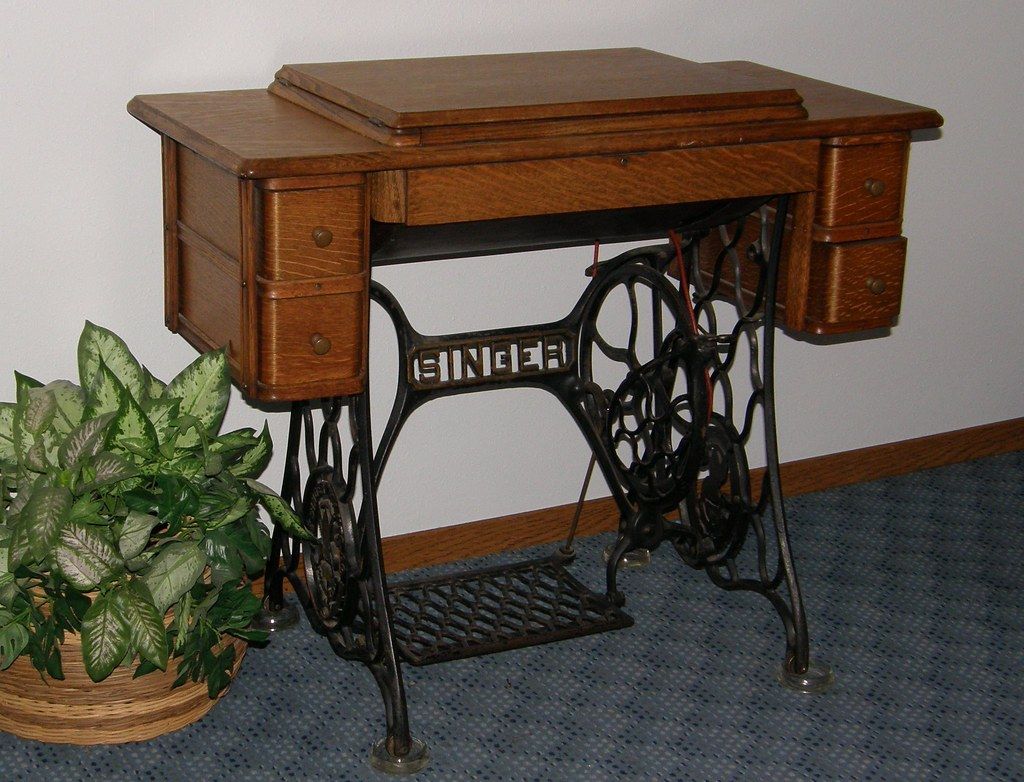
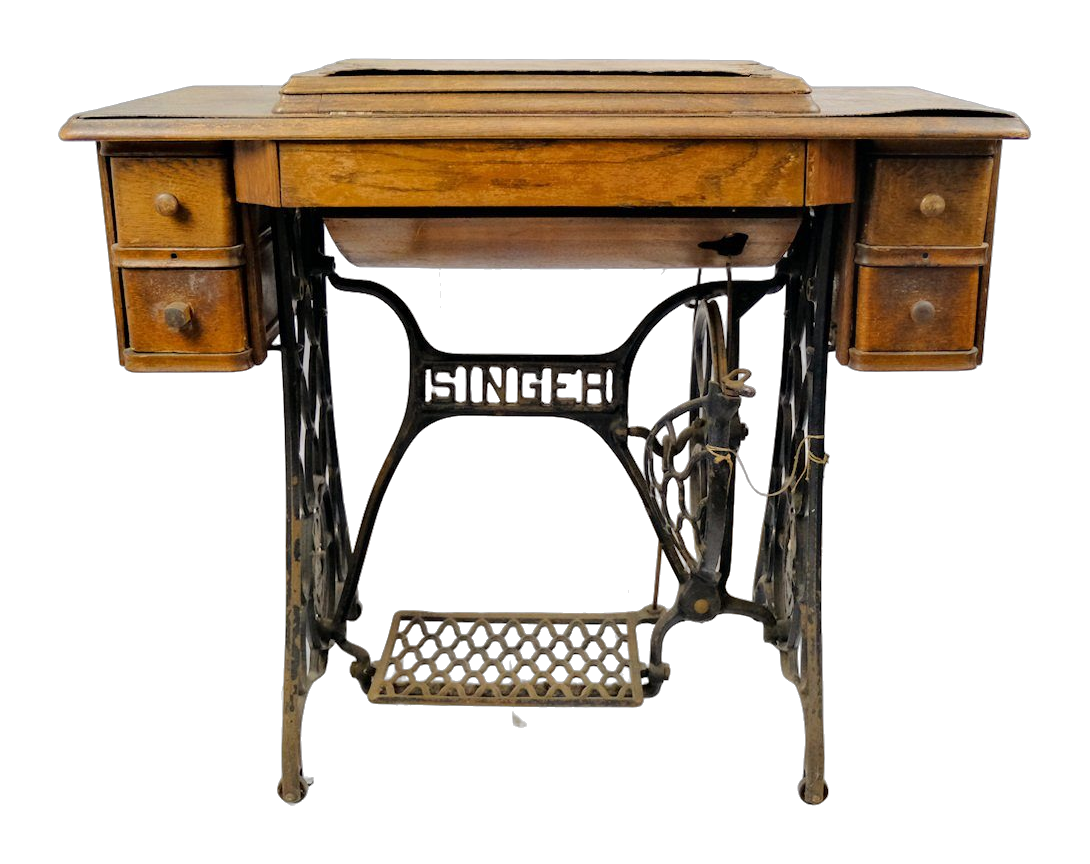
Its place in the home was in front of the window, because sewing needs light. An economy turned around it. Before ready-made clothing became widespread the family’s clothes, curtains and sheets were sewn at home; cloth was bought, an old coat was turned and made into a jacket for a child, a tear was patched. The neighbourhood’s seamstresses brought income home by sewing for neighbours; for many women the machine was the first means of earning money of their own. That is why it was counted among the most valuable pieces of the trousseau: it was not an ornament but a means of livelihood.
What ended it was not the electric machine but ready-made clothing. When clothes began to be sold for less than it cost to sew them, sewing at home ceased to be a necessity and turned into a hobby. The machines went up to the attic. Their legs, however, found an unexpected second life: those cast-iron legs under the marble-topped tables of cafés today are a generation’s sewing machines. The maker’s lettering on them can still be read.
06Sideboard, display cabinet and the guest set: the work of objects that are not used
The most important piece of furniture in the salon was very often the least used: a sideboard or display cabinet with glazed doors. In it stood the crystal glasses from the trousseau, the gilded coffee set, the silver sugar bowl and a dinner service that was never used. These were not for everyday life but for the guest, or more precisely for being shown to the guest. The “guest set” came out a few times a year, was washed and put back.
It is easy to read this as waste; its function was something else. The display cabinet was a face that exhibited the family’s standing and its past: wedding presents, the glass brought back from the pilgrimage, the porcelain brought by the relative in Germany. The same held for the salon as a whole: the best armchairs, the best carpet and the best curtains were in the guest salon whose door was kept shut; the family lived in the small sitting room at the back. The largest and brightest room of the home stood empty for most of the year.
There were reasons for this arrangement: a culture in which the guest is held in the highest regard, visits made without notice, and the fuel account that is the subject of the article on heating; the unheated salon could not be used in winter in any case. When flats became smaller and every room became warm, and when visiting turned into something announced by telephone and arranged outside the home, the guest salon lost its meaning. The display cabinet shrank, and then came down to a glazed compartment of the television unit. Yet the habit continues: in many homes the “good” glasses still wait for a guest on the top shelf of a cupboard.
Why is the living room always the largest room in a new flat, while the family very often sits in the kitchen? Because the plan is still drawn according to the tradition of the guest salon: the best façade and the most square metres are given to the least used function. The first question to ask when renovating a home should be “in which room is the most time really spent here?” The answer is very often the kitchen and the small sitting corner beside it. To give the best light and the most space to that place is to plan for life and not for objects.
The day the guest set was truly put to the test was the day of the large table, and the largest was the iftar, the evening meal that breaks the Ramadan fast. Several families of an apartment block or a street gathered in one home, and each household came with one, two or three dishes; the table was richer than anyone could have laid alone. Objects were gathered like the food: if there were not enough chairs they were brought from the neighbour, the table was extended, and if that was not enough a second table was spread on the floor. Plates and forks were lent, and the washing-up was done together. The service for twelve in the sideboard existed for that evening; today the same service, together with its table and six chairs, is not used in full even once a year in most homes.
07The chest, the wall carpet, the covers
The trousseau chest. A chest of walnut or cedar with a carved lid, very often scented inside. From the birth of a girl, needlework, towels, sheets, lace covers and quilt covers accumulate in it. The chest is both a store and a portable fortune: on marriage it goes to the new home and is the bride’s own property. Cedar is no accident; its scent keeps the clothes moth away. The wardrobe and the chest of drawers took over the work of the chest; it turned into a seat at the foot of the bed, and then into an ornament.
The wall carpet. A thin carpet hung on the wall behind the sofa or the divan, very often carrying a scene with deer, swans or a palace. Its taste is open to debate; its function is not: it separates your back from the cold uninsulated wall and takes the echo out of the room. The kilim and the felt hung on the wall do the same job. When walls were insulated and became warm there was no longer any need; the framed picture took its place, and that does not warm the wall.
The covers. The lace on the television, the radio, the low table, the arm of the chair and the place where the head rests. Part of it is protection: the cover on the headrest keeps hair oil, and the cover on the arm keeps perspiration, away from the upholstery; when soiled it is washed, and the armchair is not. Part of it is labour: the display of a young woman’s patience and skill. And part of it is domestication; putting something made by hand on an object that has come out of a factory makes it belong to the home.
08Side by side
| Object | Its job | Effect on the room | What ended it | Today |
|---|---|---|---|---|
| Bedding cupboard and floor bed | Hides the bed by day | The same room is used day and night | The bedstead | The built-in wardrobe, the dressing room |
| Divan | Seating along the wall | The middle stays free | The three-piece suite | The corner sofa, the window seat |
| Raised floor | Separates the dirty from the clean | A floor without shoes | The level floor | Shoes taken off at the door |
| Bedstead, wardrobe, suite | Status and comfort | Rooms are divided into single functions | It has not ended | Common |
| Sofa bed | A sofa by day, a bed by night | Multiplies the small flat | It has not ended | The fold-away bed, modular furniture |
| Treadle sewing machine | Produces clothing at home | In front of the window; a table when closed | Ready-made clothing | The legs of café tables |
| Sideboard, display cabinet, guest set | Exhibits standing | The best room is set aside for the guest | The smaller flat, the changing custom of visiting | The top shelf of the cupboard |
| Trousseau chest | Store and portable fortune | The foot of the bed | The wardrobe | An ornament, a seat |
| Wall carpet | Covers the cold wall | Takes the echo | Insulation | Acoustic panels do the same job |
09What did it bring, what did it take away?
The bedstead and the armchair brought a real comfort: getting up from the floor is hard for an old body, a fixed bed is a blessing for the sick and the tired, and for everyone to have a room and a door of their own is no small gain. Privacy is the greatest gift of modern housing.
What it took away was flexibility. The room with a bedding cupboard served one purpose in the morning and another in the evening; the furnished room serves only the purpose its name states. We pay for this in square metres: dwellings have grown, households have shrunk, and most rooms are empty for most of the day. As housing in cities becomes more expensive this account is being done again, and the answer comes from the place we left a hundred years ago: the bed that is put away, the table that folds out of the wall, the seating with a cupboard inside, the guest room that is a study by day.
The second loss is the lifespan and the meaning of objects. A chest lived for three generations, a sewing machine worked for a hundred years, and a wool mattress was carded afresh every year and used for a lifetime. Objects were few and expensive, they were repaired, and they had a story. Today the furniture of a home changes every few years, and nobody asks whom any of it came from.
The common conclusion of these five articles is this. From the stove to the carpet sweeper, from the meat safe to the bedding cupboard, none of these objects was only an object; each shaped the plan of the home, the day of the family and the relations of the neighbourhood. What has replaced them very often works better. But the questions to ask when designing a home have not changed: how many hours of the day will this room be used, where will this object go when it is not in use, who will sit where in this home, and will they see one another? The old objects had given their own answers to these questions. Our job is to ask the same questions again today.